Unit of Inquiry
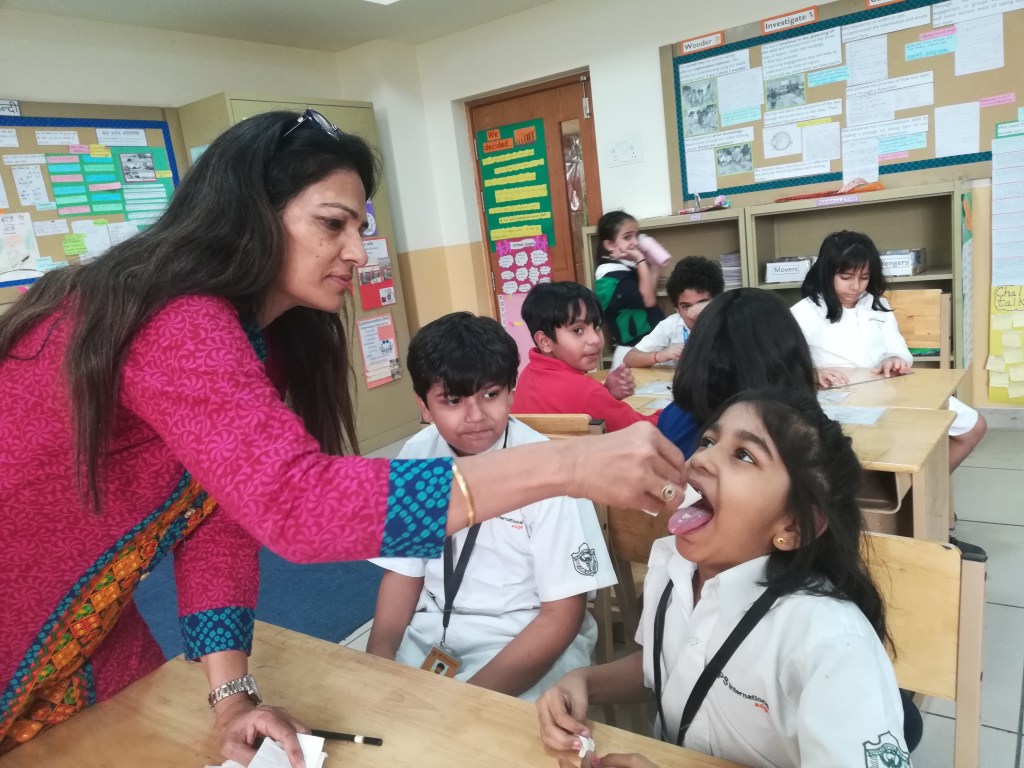
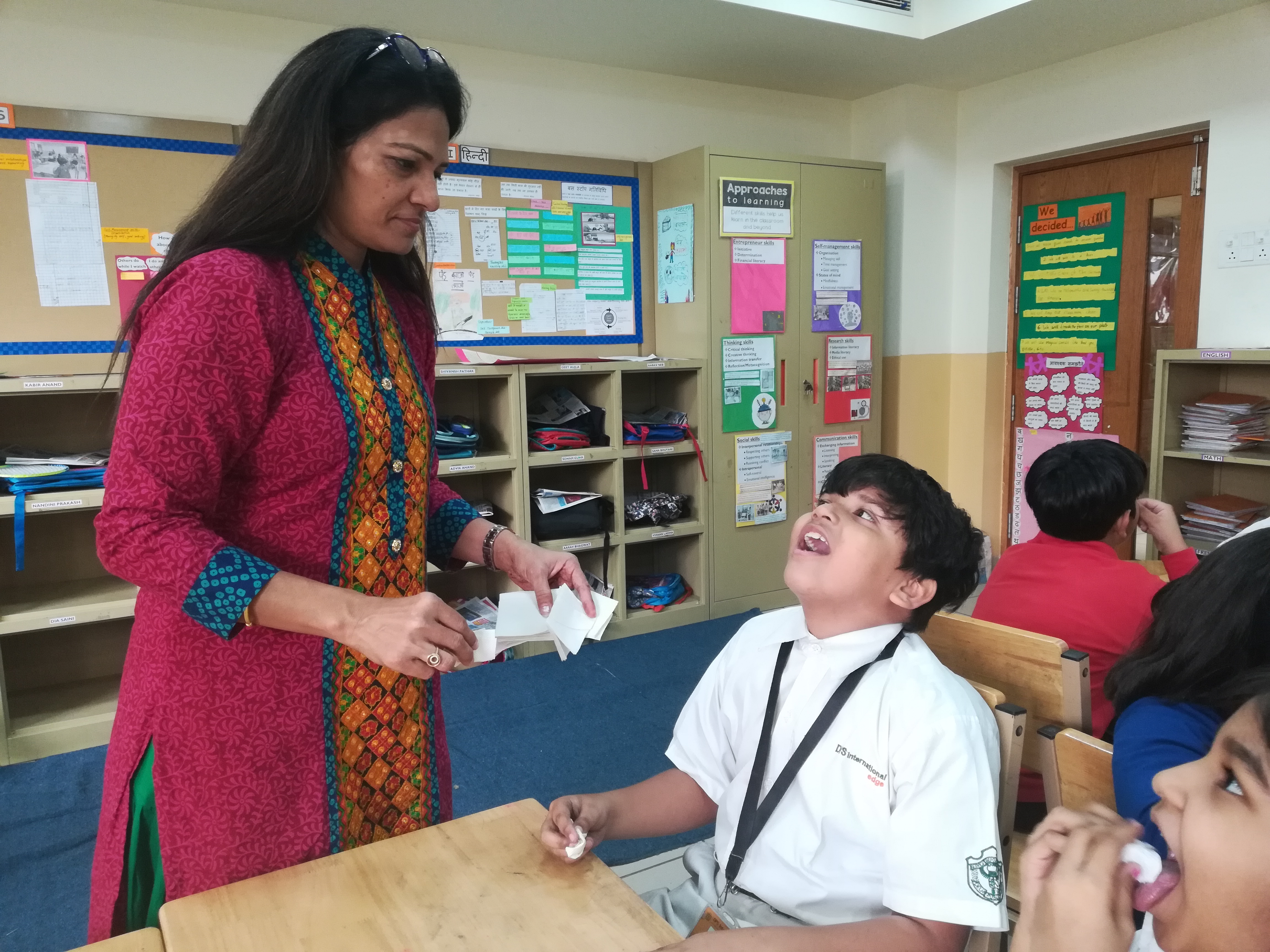
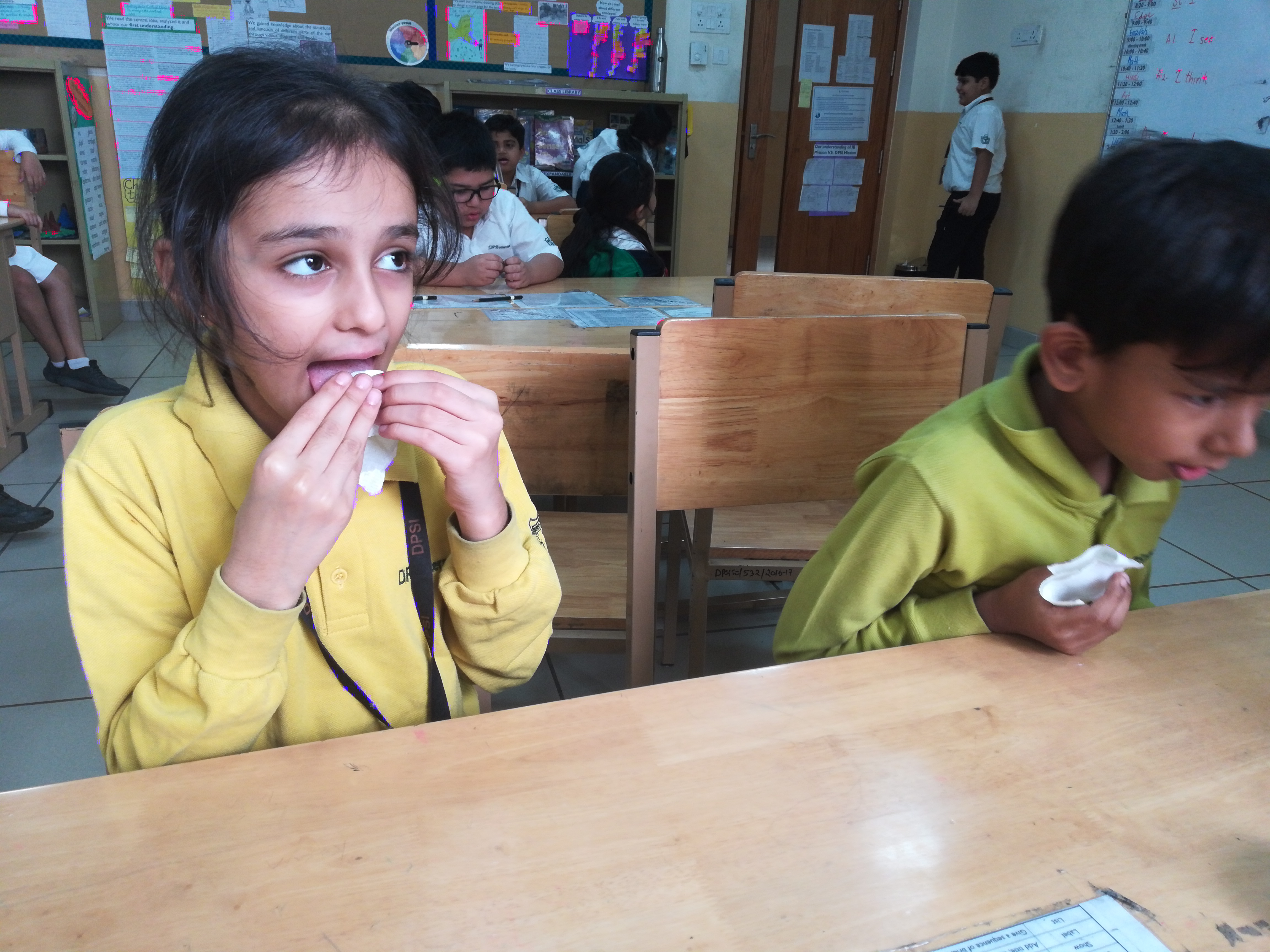
To understand the correlation between the sense of smell and taste, students inquired about how they are connected while having breakfast. In addition, they further studied the different parts of the nose and tongue. The class performed an experiment to understand the role of saliva in tasting what they eat. They were made to dry their tongues with a clean paper towel and try a few samples of salt and sugar and were thrilled to discover that for us to savour taste, chemicals from the food must dissolve in saliva.
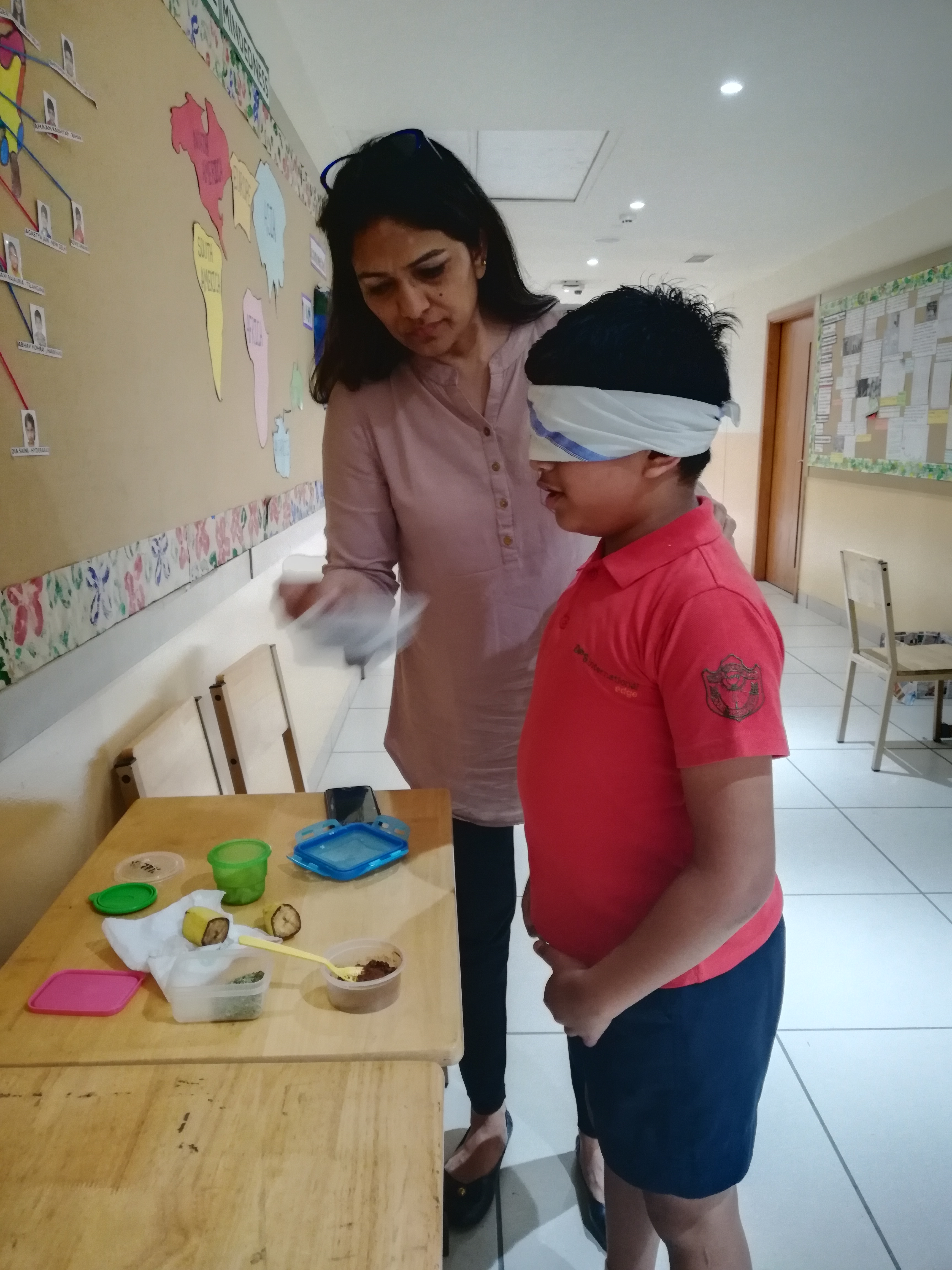
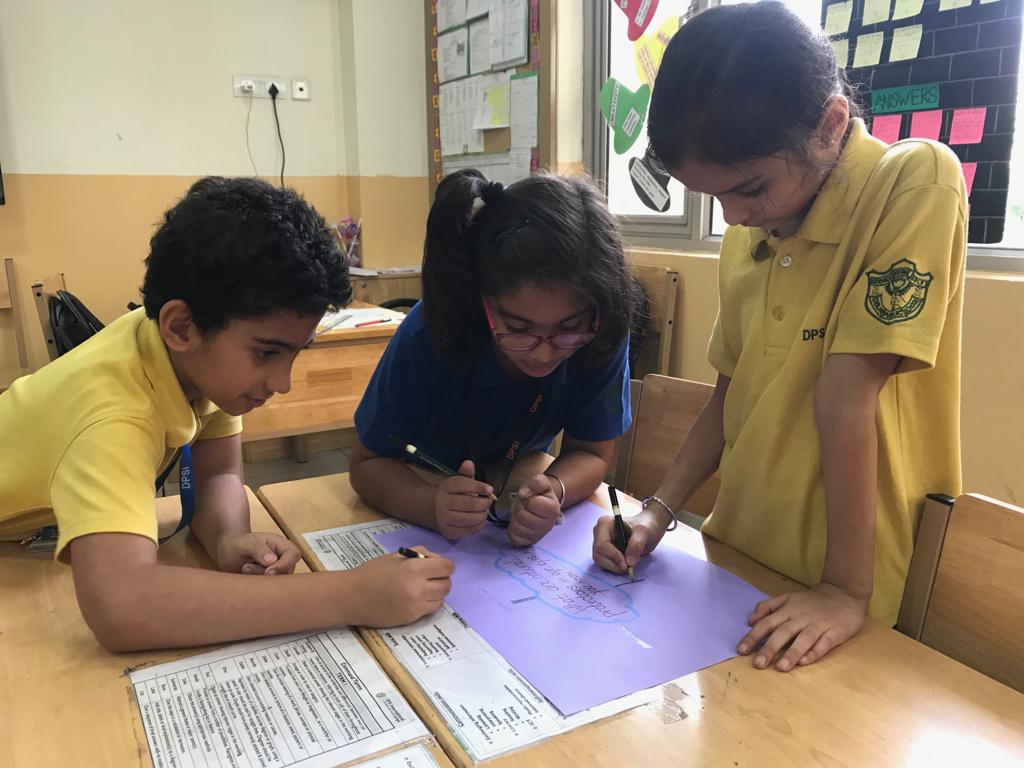
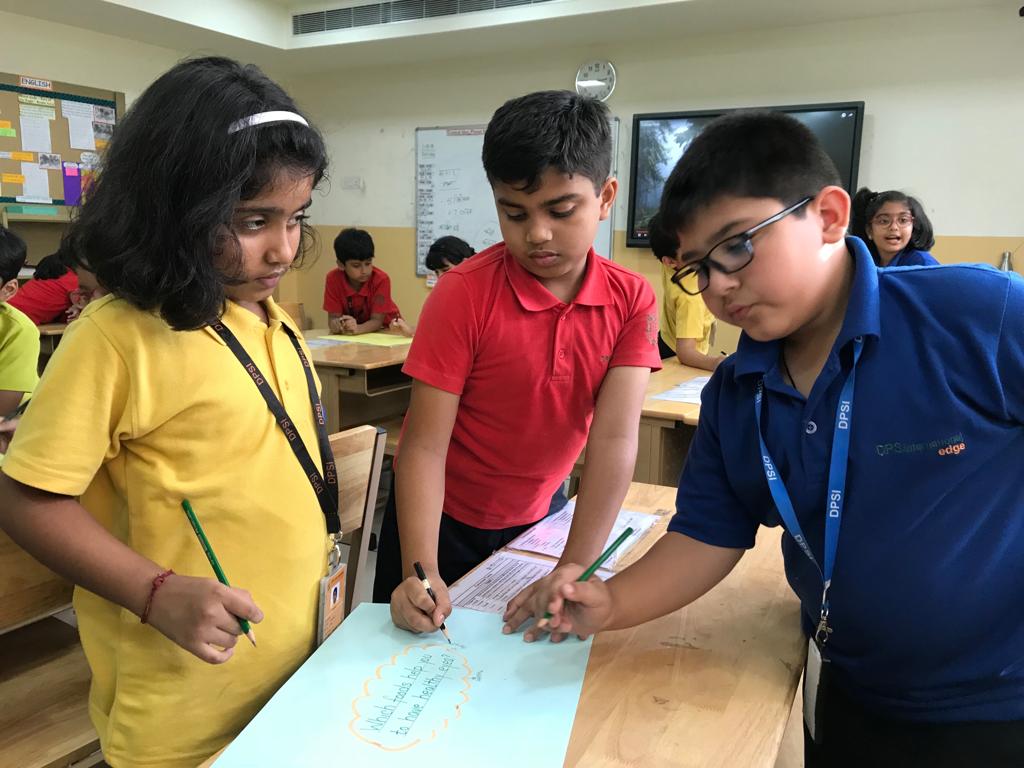
Integration with English ‘Procedural writing’, started with the ‘perfume experiment’ where students learned about the structure and functioning of the nose to sense the aromatic whiff. Further they learned about the composition and purpose of different parts of the skin as they labelled a diagram of the same. A discussion was then held on ways to take care of skin and keep it healthy.
How the nose works
How the skin works

Mathematics
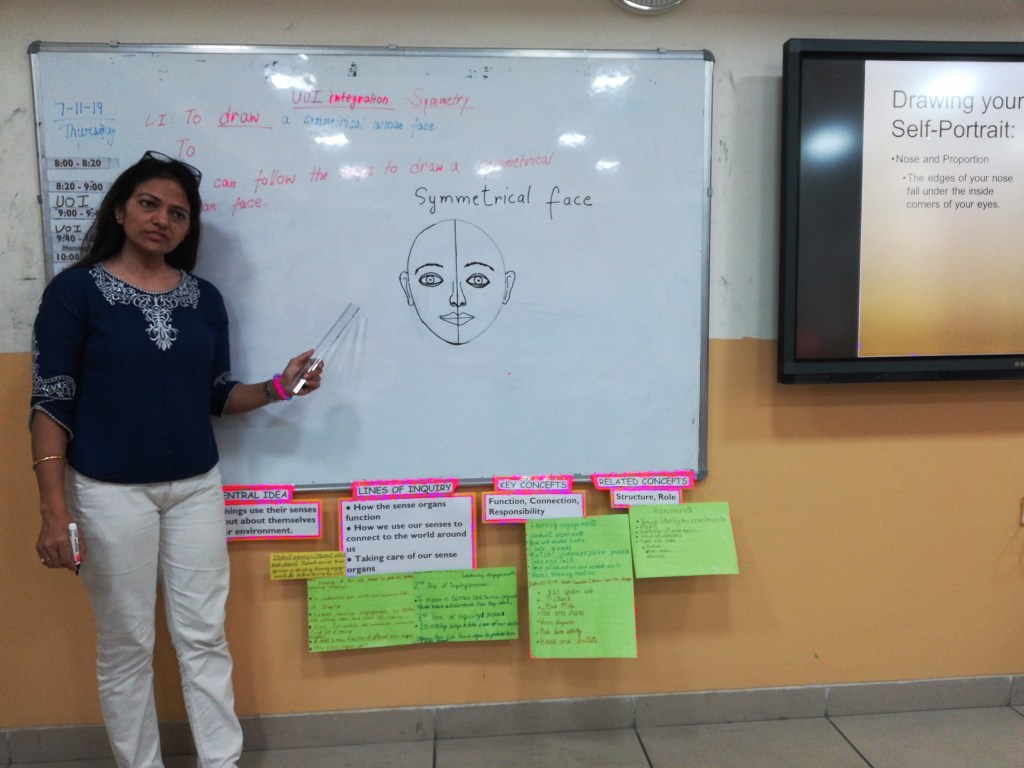
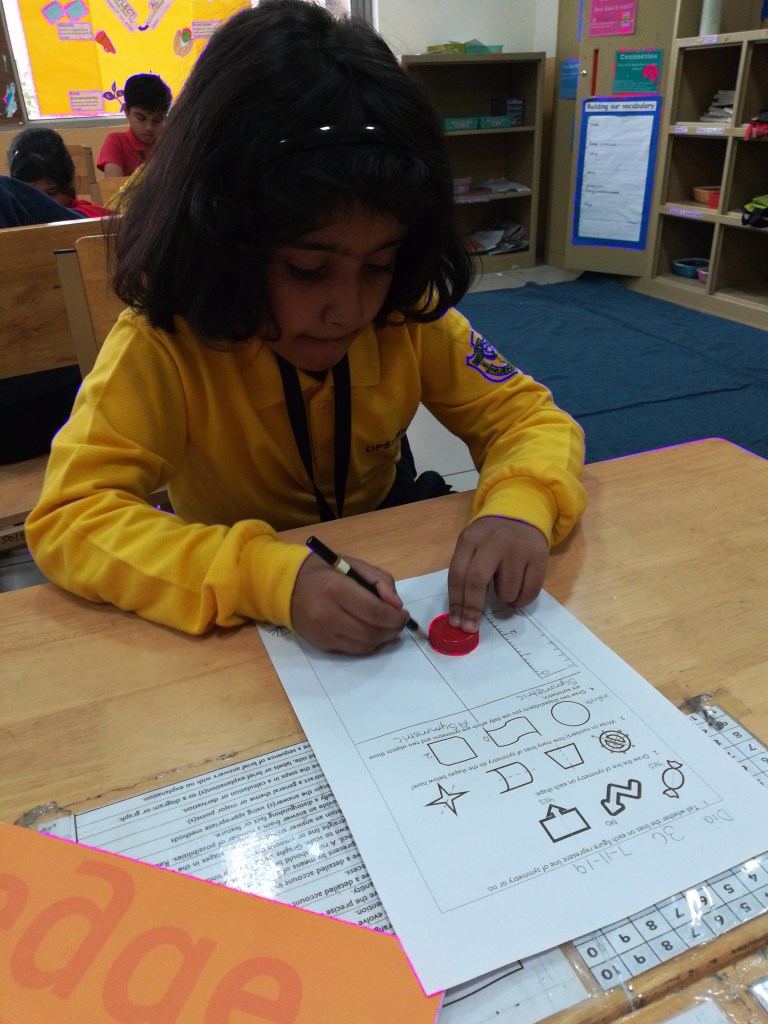
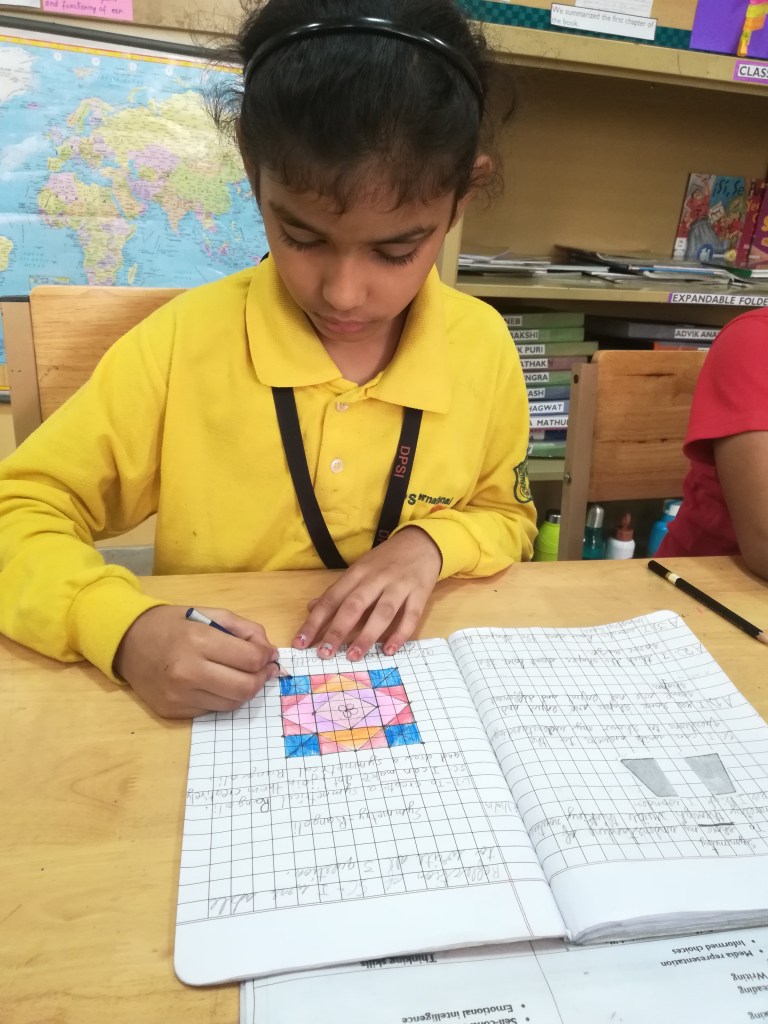
Students practiced word problems with multiplication prior to which they were assessed on their understanding of the same. They focused on symmetry where they were given cut outs of different shapes and asked to fold them down the middle/horizontally/vertically. They were then asked to reflect on their understanding through the visible thinking routine ‘I see, I think, I wonder’. Symmetry was then introduced and discussed in detail by making real life connections to where it could be found in nature. The class watched a pesentation on Rangoli designs and enjoyed trying their hand at creating symmetrical displays with dots as guidelines. This helped enhance their creative thinking skills as they chose their own arrangements and coloured them. As an integration to the unit on senses, they made a symmetrical human face with special reference to placement of eyes, ears, nose and lips. Subtraction was deliberated upon while using the visible thinking routine ‘The Explanation’ game. Students were apprised of different subtraction mental math strategies along with the vocabulary related to the operation. Students engaged in vertical subtraction with and without borrowing.
Lines of symmetry
Rangoli design
English
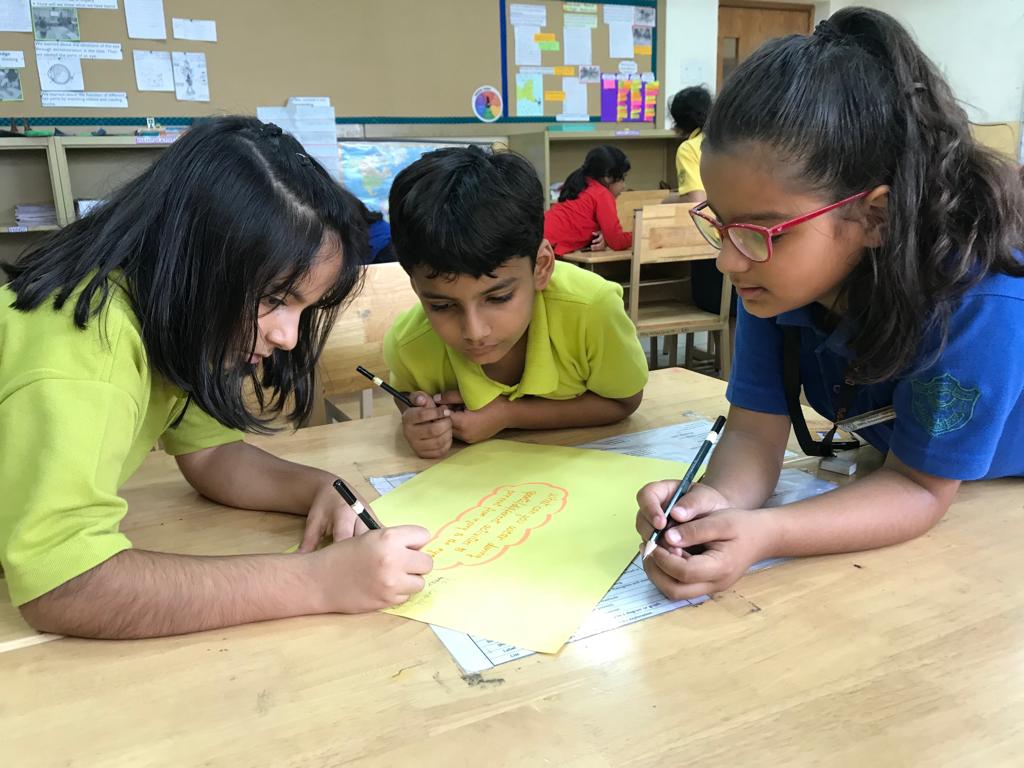
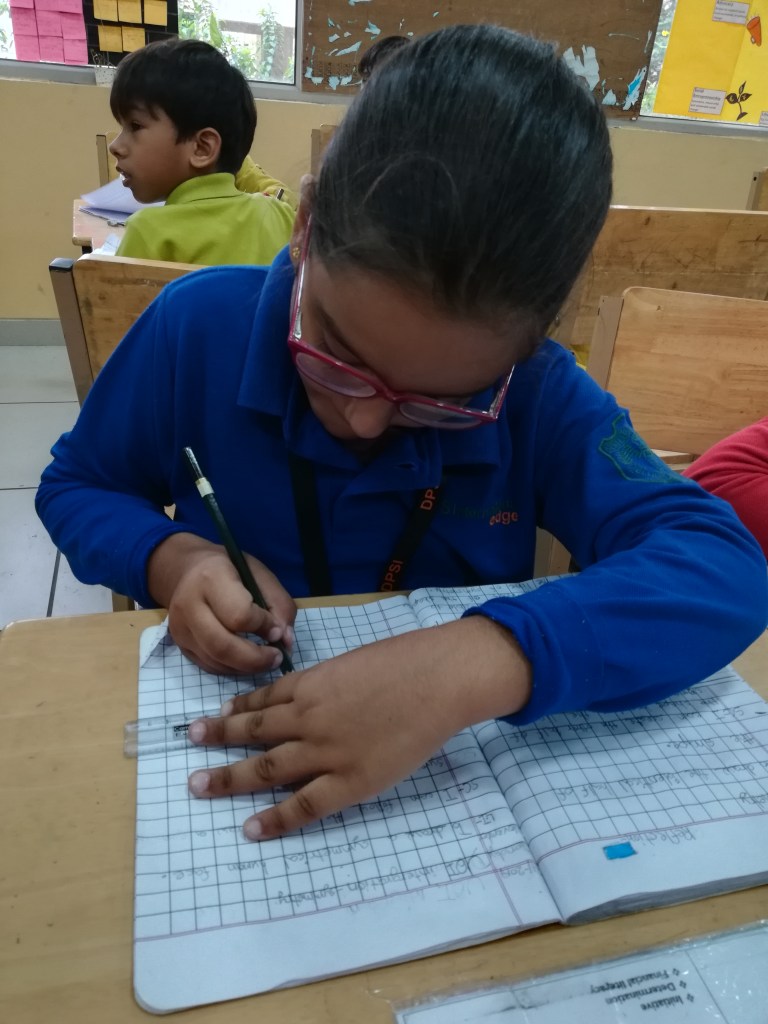
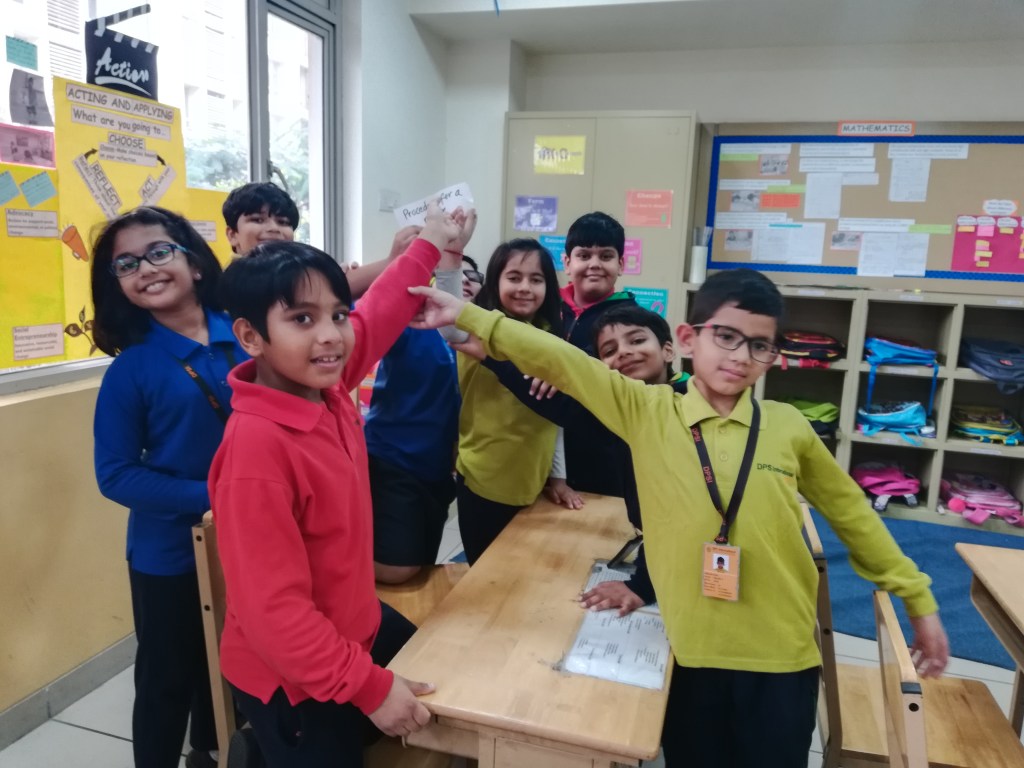
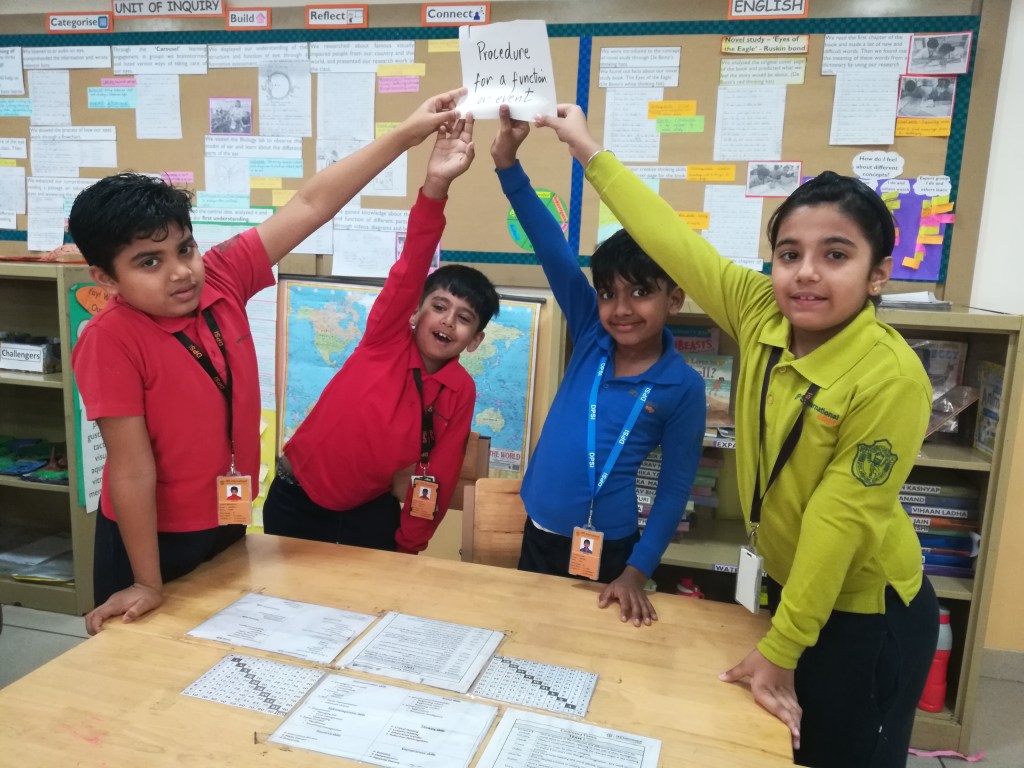
Students read chapter three of their novel study and revisited pronouns. They were introduced to procedural writing through a listening activity where samples were read out, which led to a discussion on how they could be used in different situations. They enjoyed doing procedural writing using the bus stop activity where each group selected a topic related to a different bus stop. They referred to the checklist given to ensure their writing was correct. Integrating the unit on ‘Senses’ with language, the class revised the journey of light through the eye and the flow of sound waves through the ear. This was followed by procedural writing in the correct format for these sense organs. Students then reflected on their understanding as they questioned and discussed how procedural writing differs from informal writing and diverse ways in which it can be used. They penned down their thoughts through the visual thinking routine ‘I See, I think, I wonder’.
Pancake recipe
Hindi
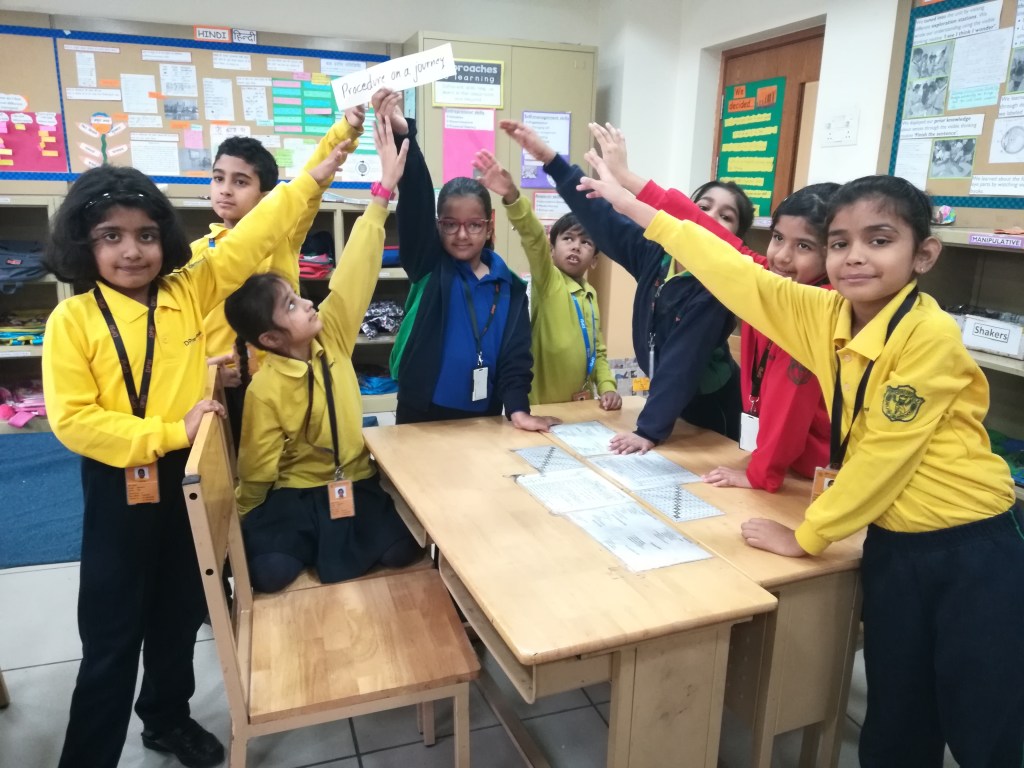
Students were made to watch a documentary on Mother Teresa and Sunder Rajan Pichai in order to enhance their critical thinking and listening skills. They discussed reasons for migration. The class enhanced their speaking skills through ‘Bas Ek Pal’ activity on the topic of sense organs and their care. Knowledge of spellings was self-assessed through spell bee riddles.
Hindi ab-initio
To enhance their reading skills they read words from badee ‘u’ ki maatraa wale shab from reading material. To enhance their writing they formed words from badee ‘u’ ki maatraa wale shabd. They watched a video ‘Char brahman’. To enhance their speaking skills they re-tell the same story. From a picture they identified sangya words and wrote it.They played bingo from ‘e’ maatra shabd.
French
The objective of the French lesson was to peer-assess the knowledge acquired on numbers given in homework. It encouraged learner involvement and participation as the students engaged in thoughtful discussion while correcting their fellow classmates’ assignments under the supervision of the facilitator. They developed their thinking skills by applying their acquired knowledge and were caring and appreciative towards their associate’s achievements.
Spanish
Students learned the cardinal numbers from 1 to 50 and ordinal numbers from first to tenth. They were taught how to pronounce cardinal numbers and their difference in application to ordinal ones. Students also learned the uses of both kinds of numbers with their application in daily lives.
PHE
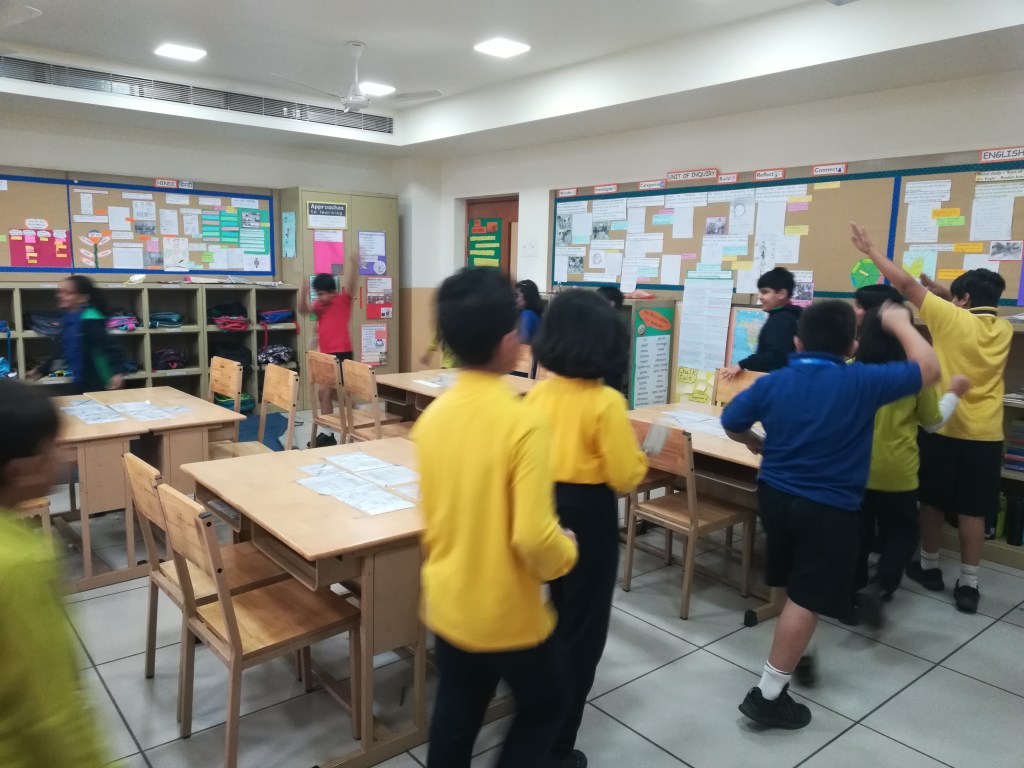
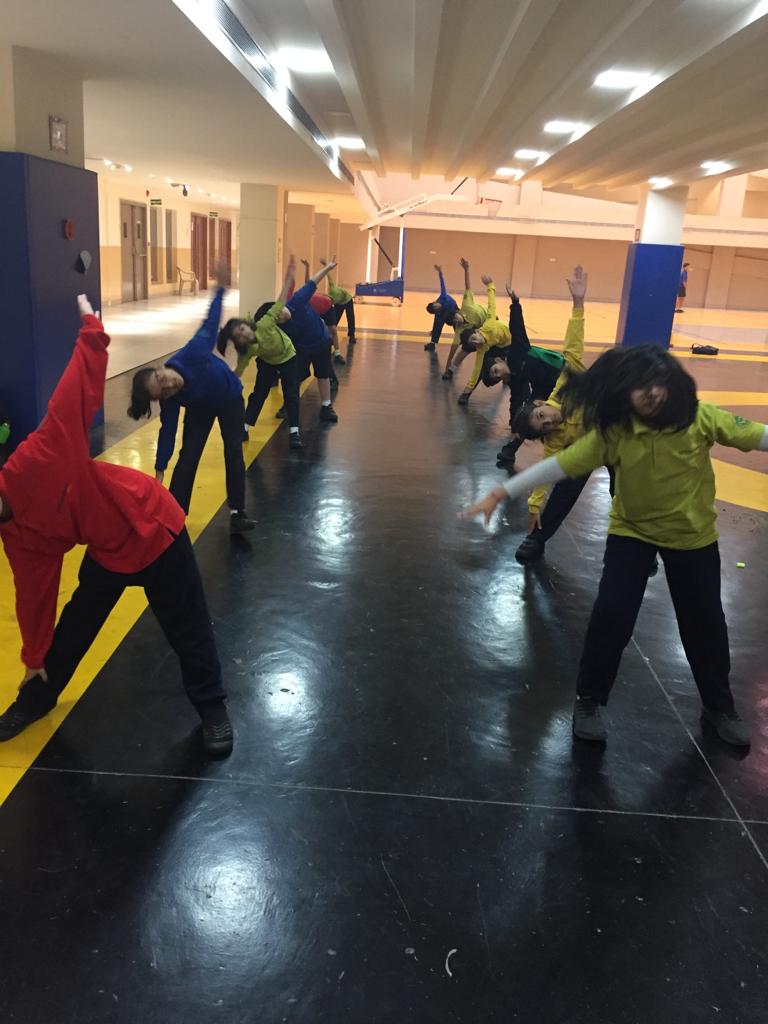
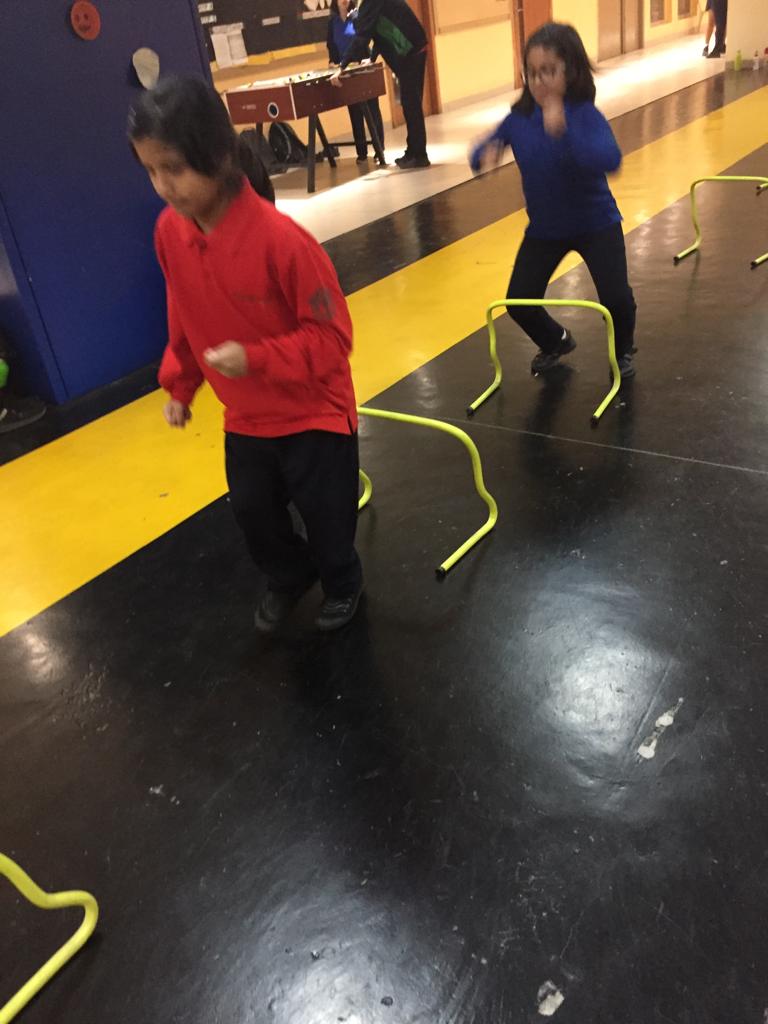
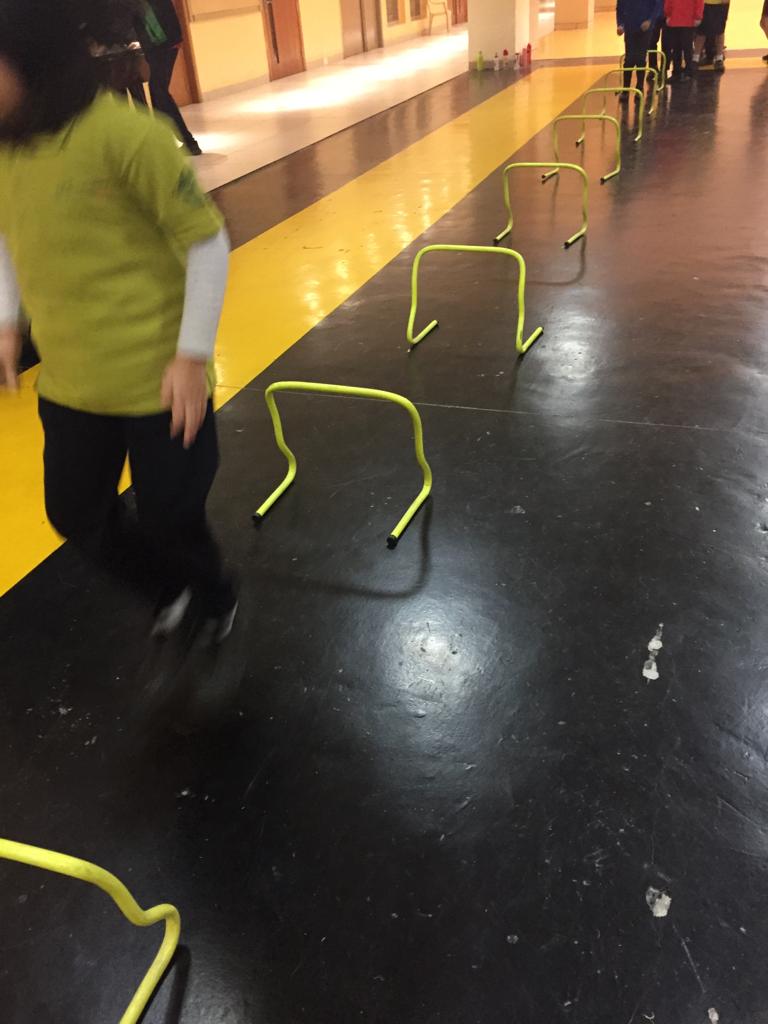
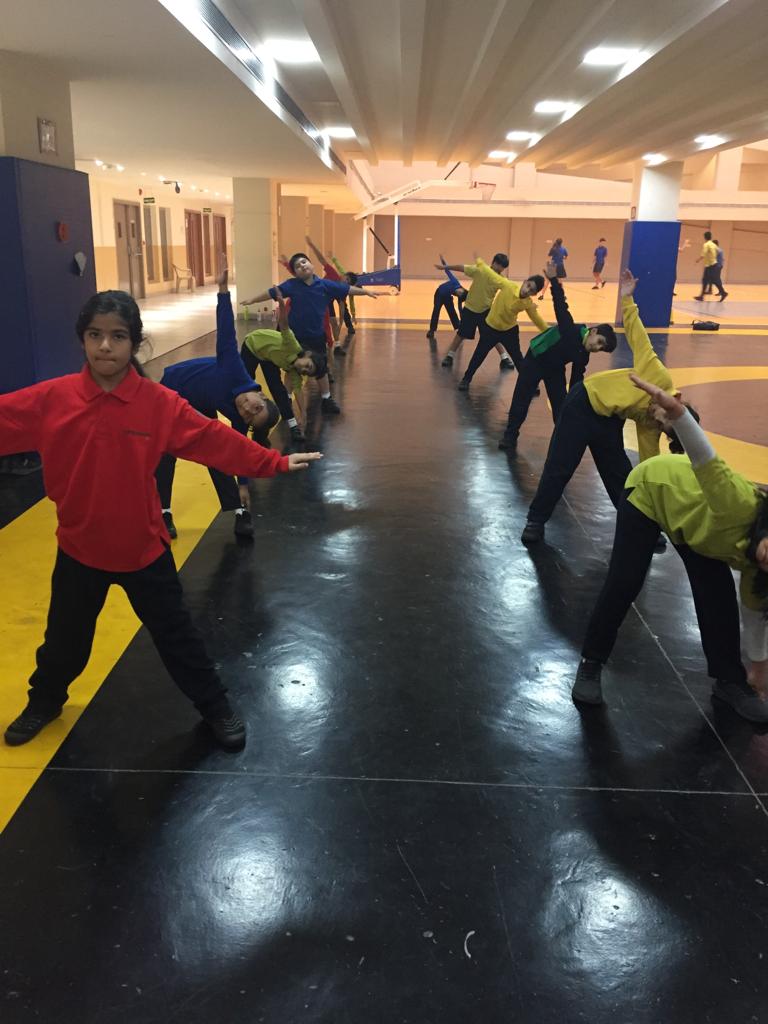
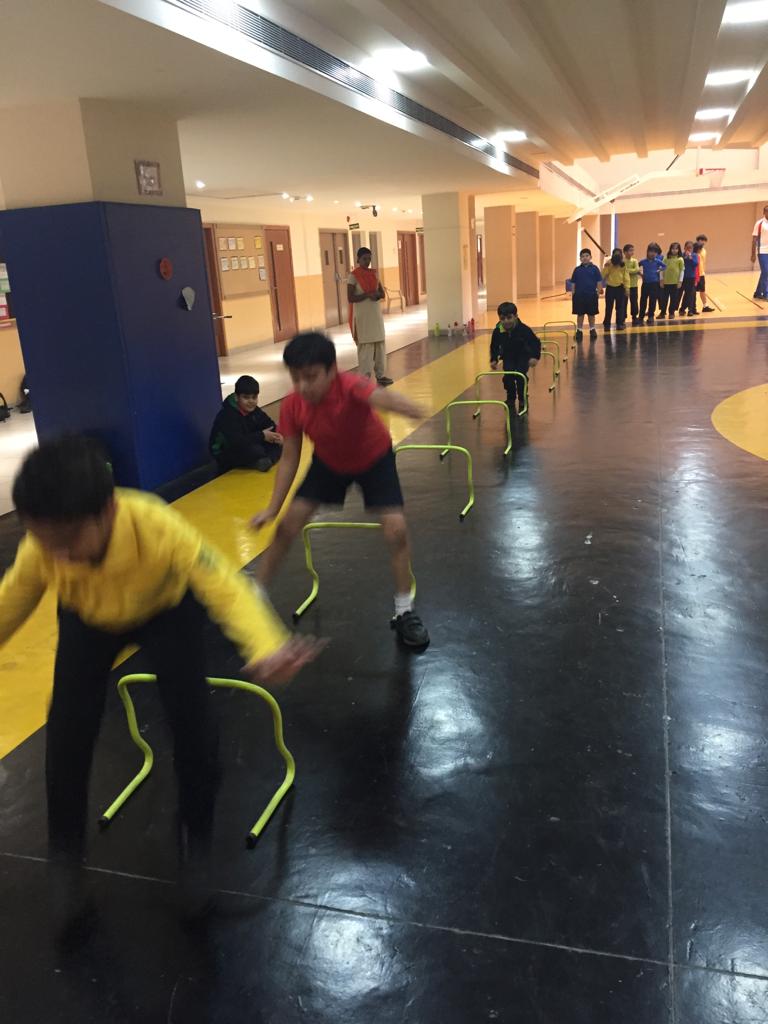
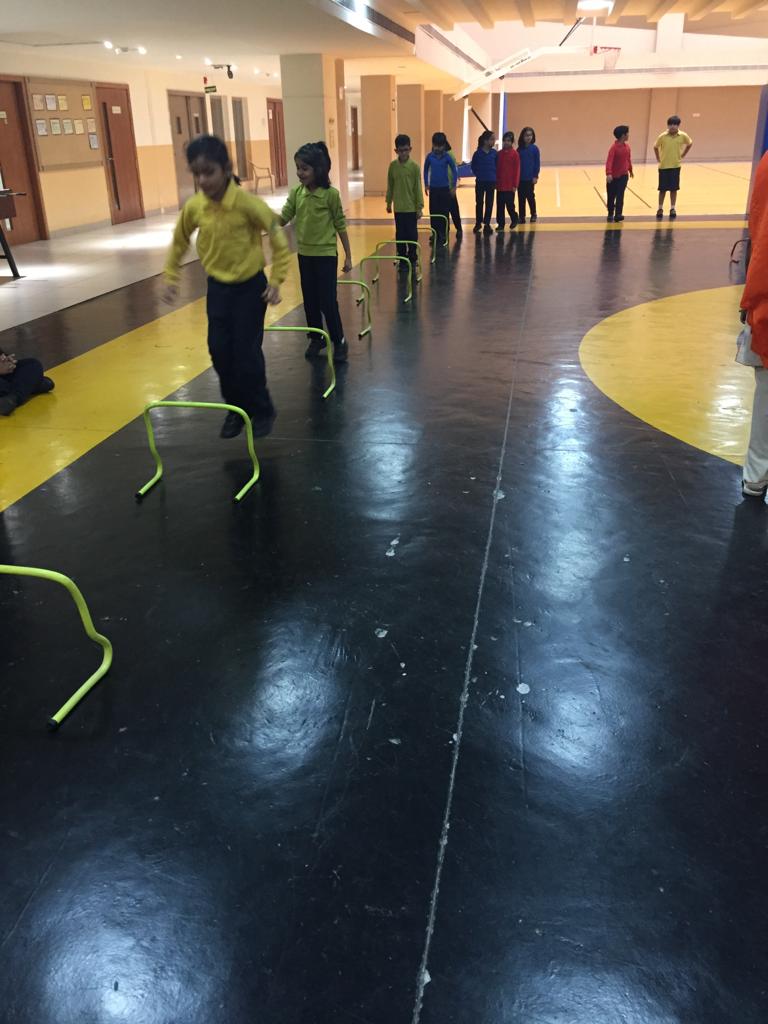
Introduction to circuit training is a fun and interactive way for children to be physically active. Fitness courses consist of setting up several stations with different events for students to rotate through in short periods of time. These include jump rope, hop scotch, throwing balls, shuttle runs, hula hoop, relay races, jumping jacks and dashes. Students engaged in various activities towards this end.
Art
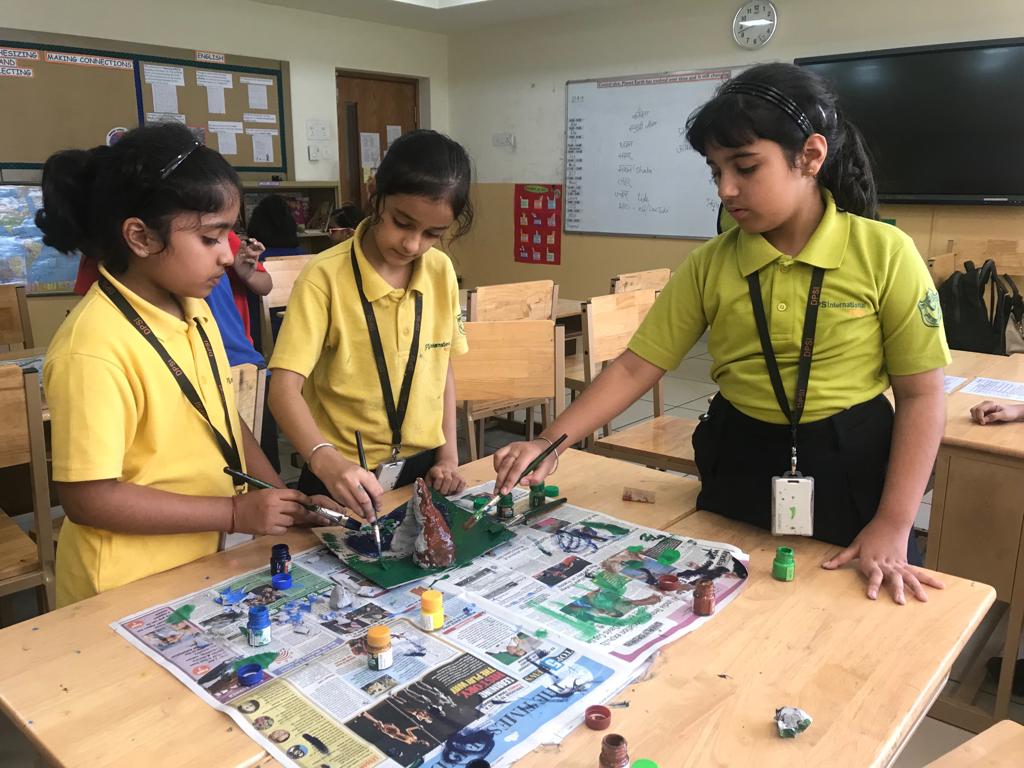
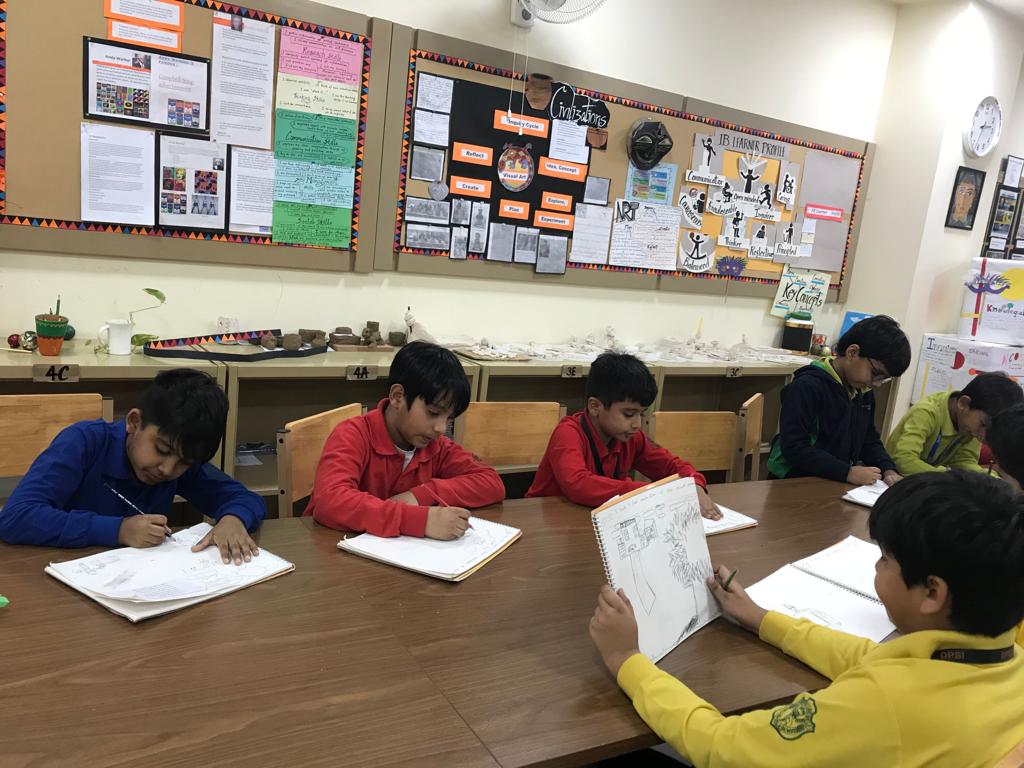
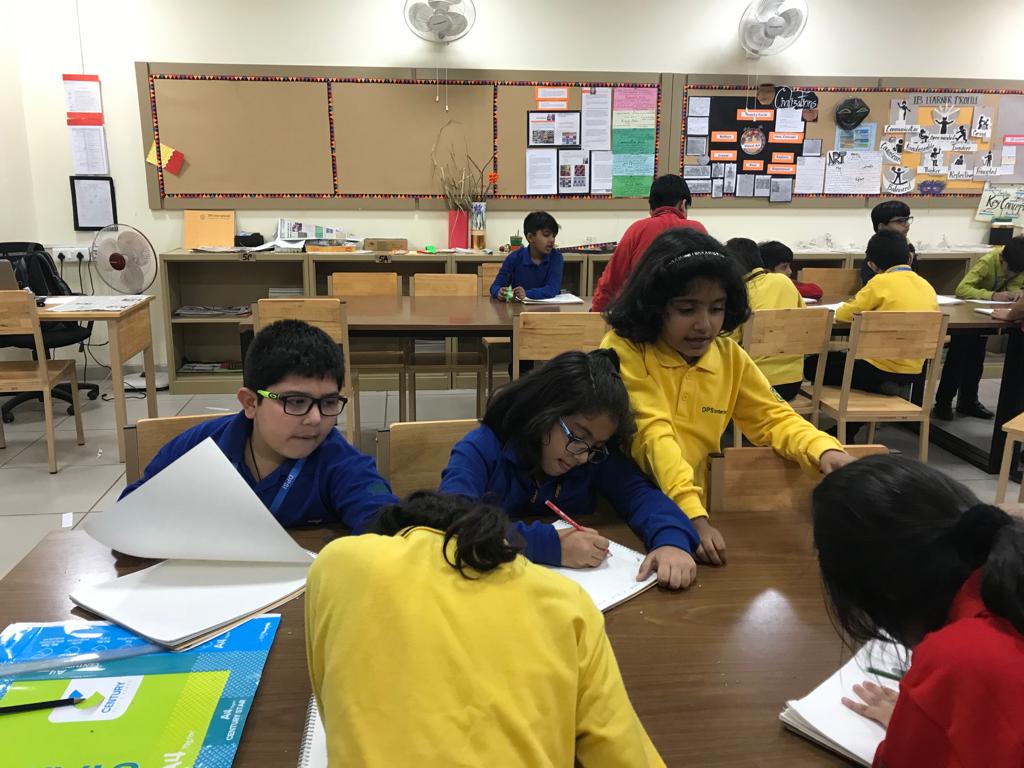
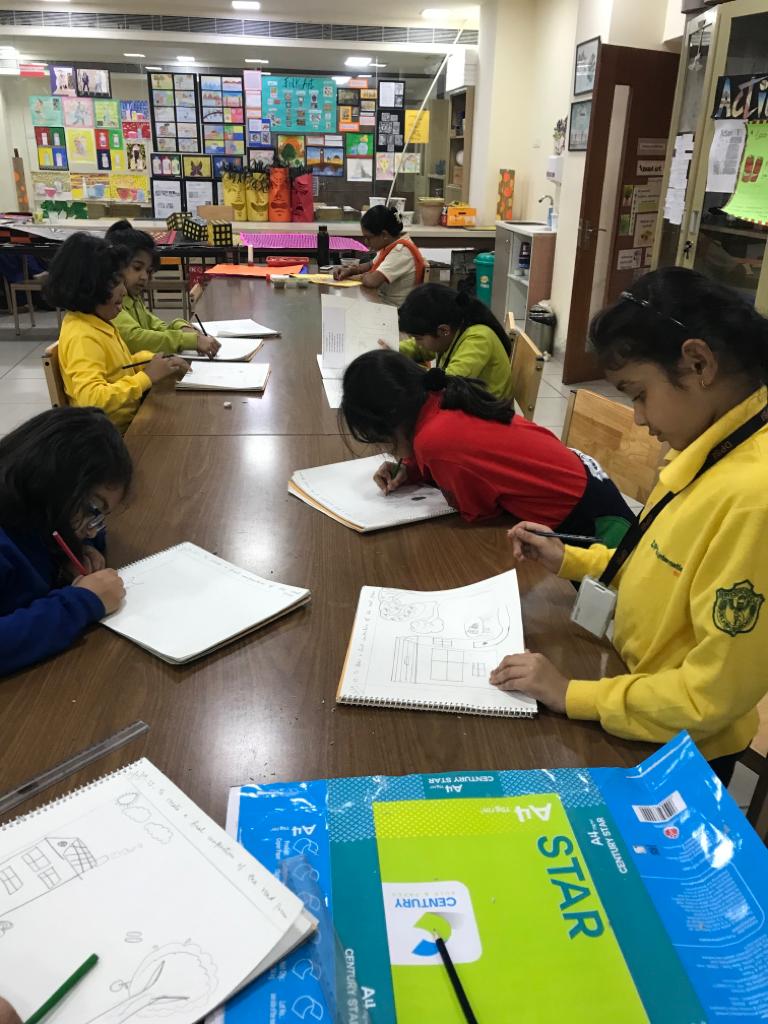
Students read a poem on senses and reflected their understanding by creating a layout of an illustration for the verse. Some of them created their final work incorporating the given feedback on the arrangement.

Dance
For better flexibility, students were made to stretch their bodies to challenging limits through warm ups and exercises. Jumping, spotting, kicks and plies were practiced to improve posture.
Music
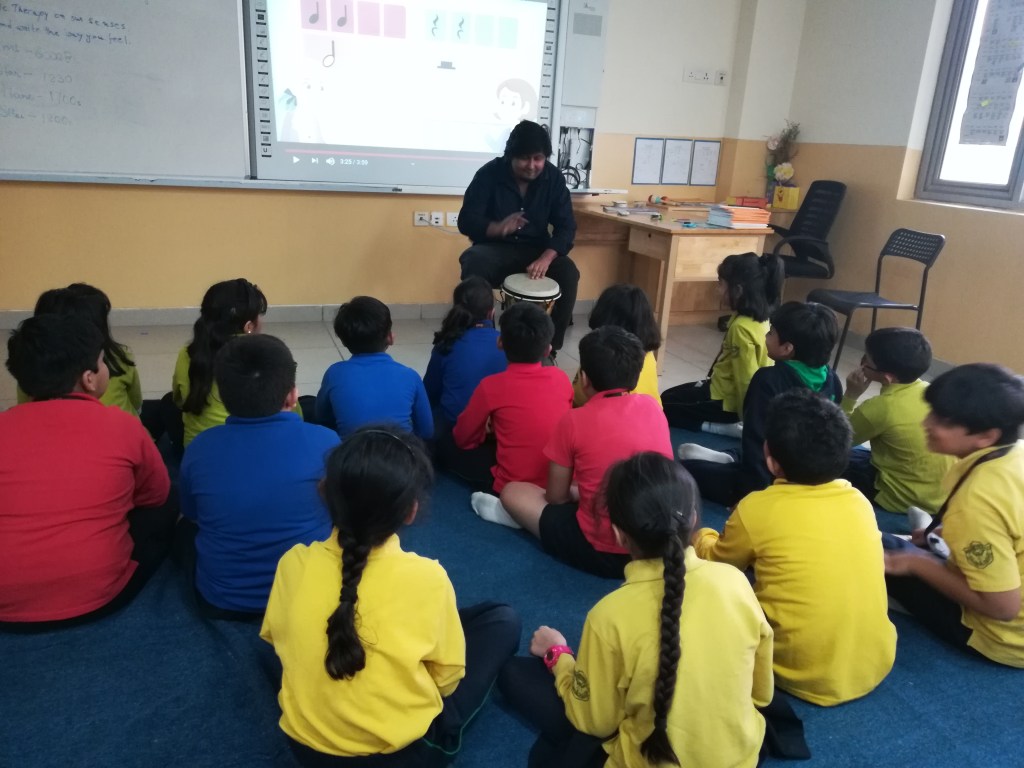
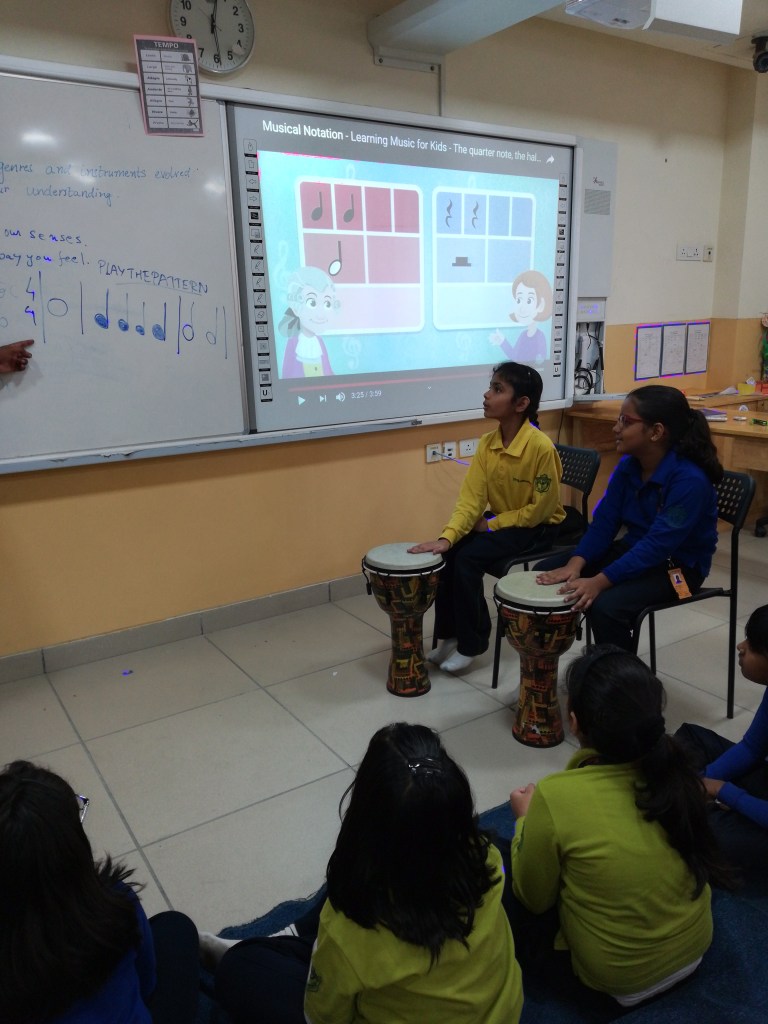
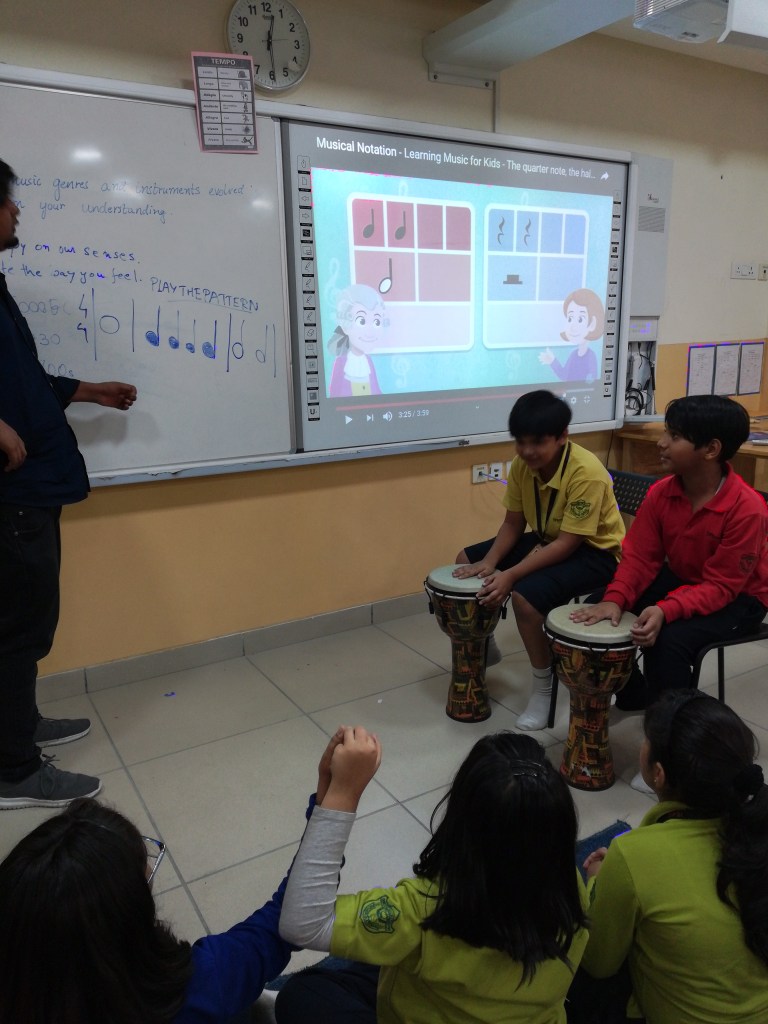
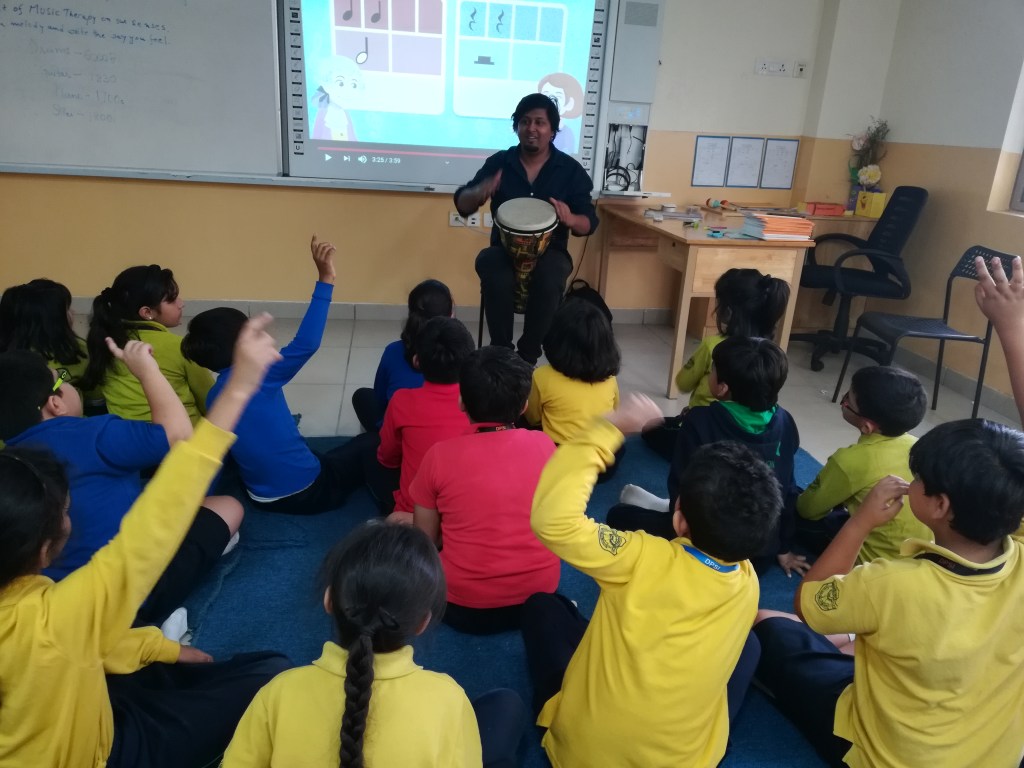
Students were divided into groups and were asked to create their own beats and note patterns. They enjoyed the activity and performed their own rhythms and melodies. The class was assessed on the basis of their individually created pattern and knowledge on the basis of Note Values. Students also learned and sang the first verse of the song ‘Octopus’s Garden’.
ICT
Students constructed merge cube which was used to view a 3D model of sense organs made in Paint 3D. They also learned to upload 3D items on the app: ‘miniverse.io’. The ‘object viewer app’ was also used to view articles on merge cube thereby enabling the students to experience augmented reality by designing their own models.

