Unit of Inquiry
Students furthered their inquiry into the unit by finding out reasons that trigger rural to urban migration. They read an article on Migration in India and discussed why people from villages move to cities. They wrote their understanding of immigration, emigration, and migration.
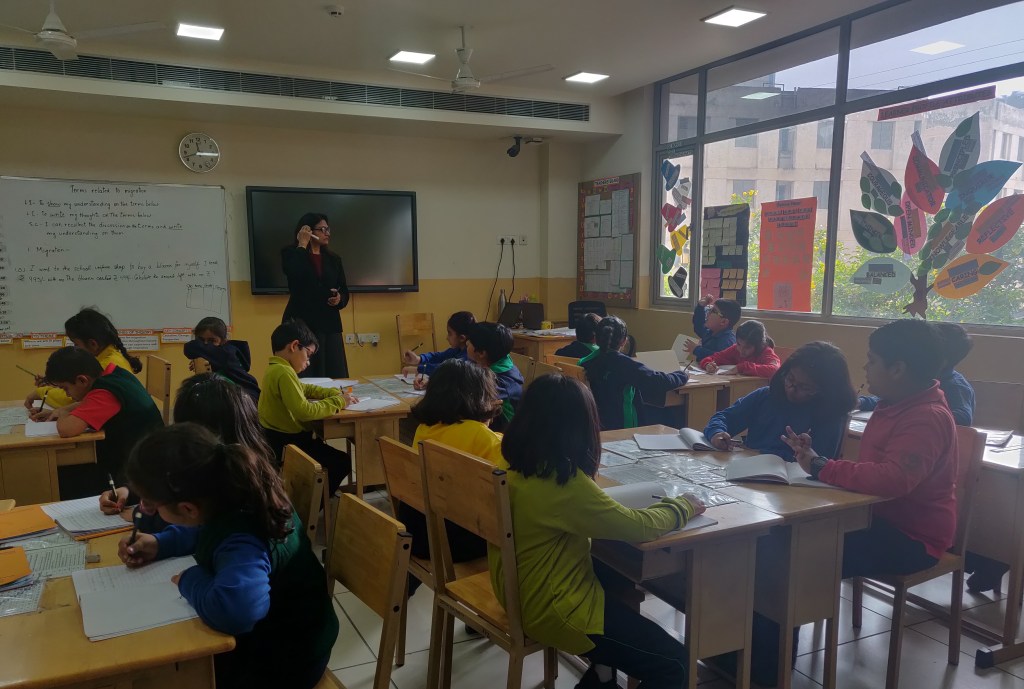
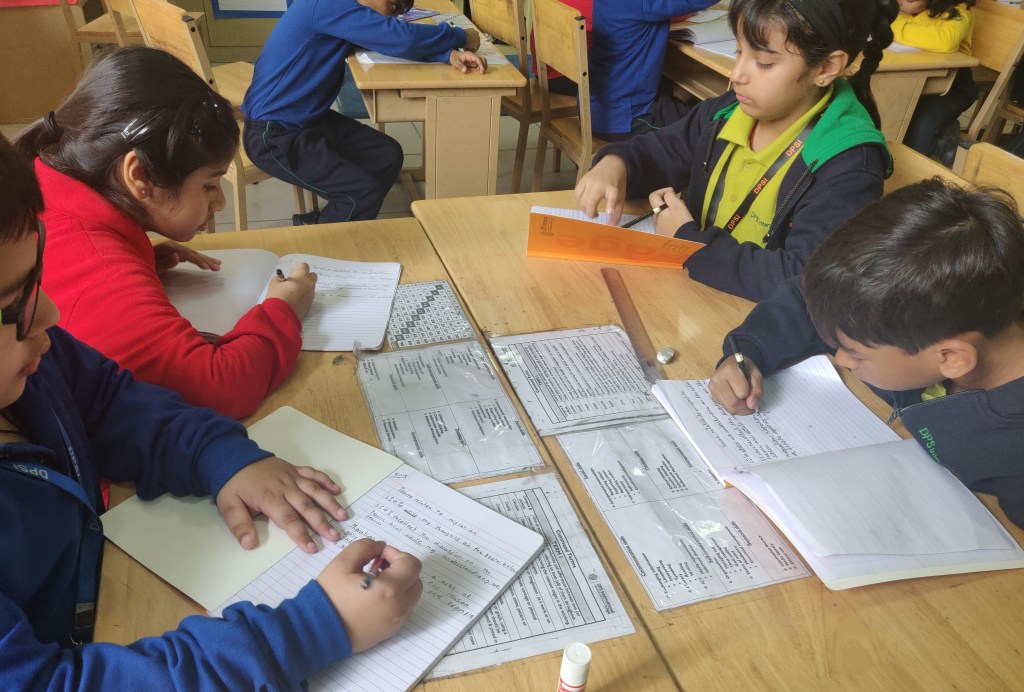
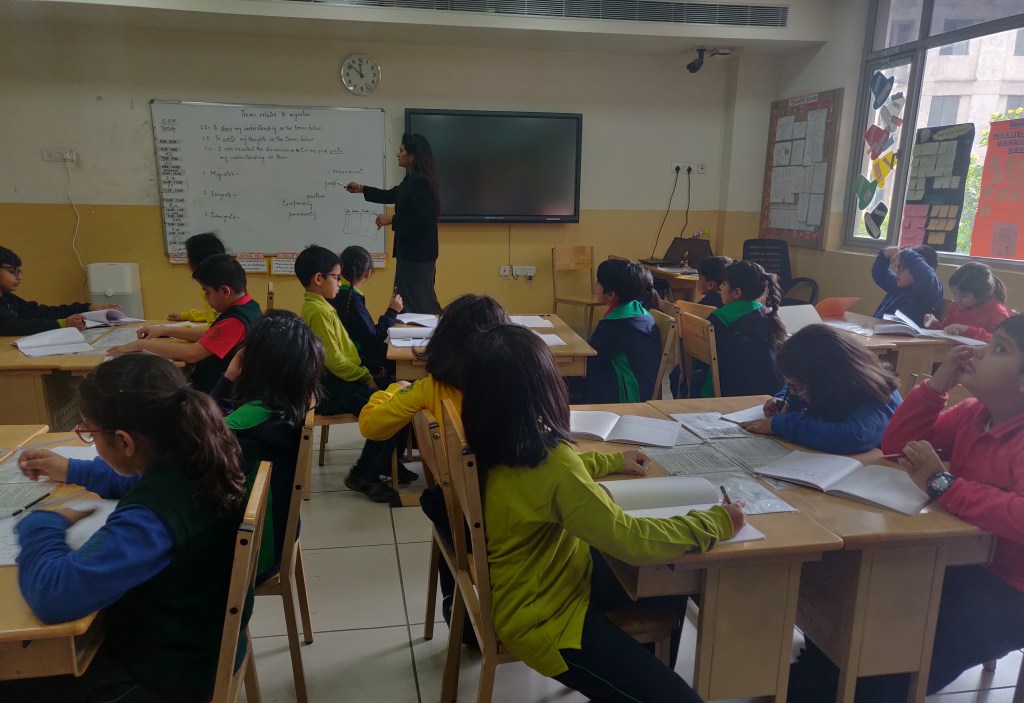
The students deliberated on immigration to the United States using a case study on mass migration during the California gold rush. They considered case studies to understand migrants, internally displaced, refugee and asylum seekers.
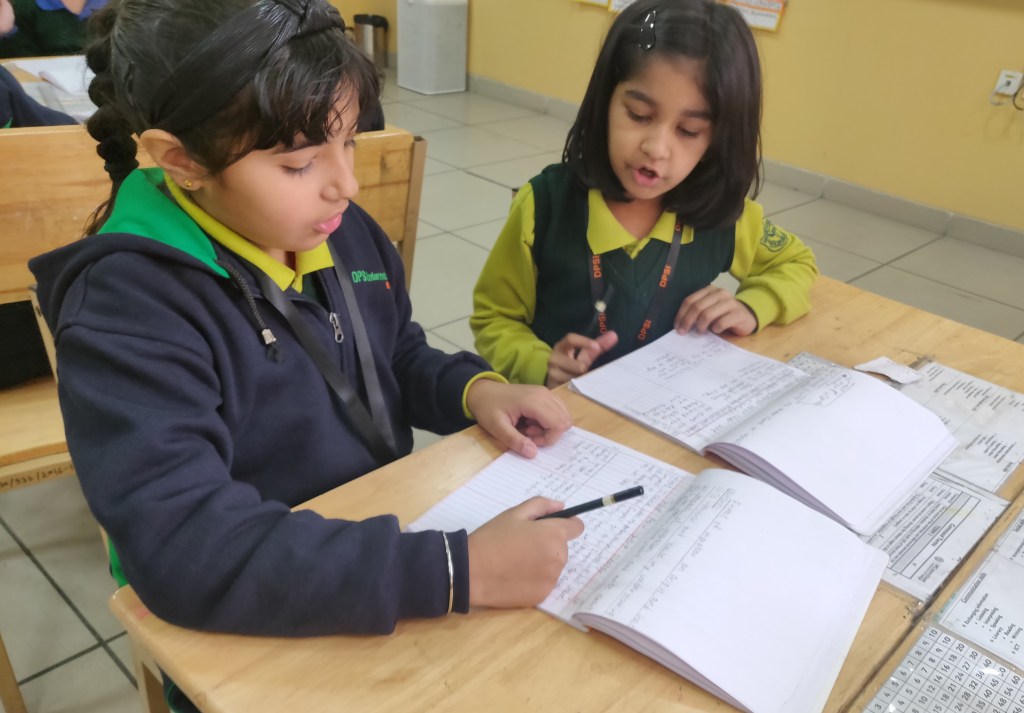
They worked in pairs to research the impact of migration on the country of origin as well as the destination country. They presented their research work through a Visible Thinking Routine ‘Think Pair Share’.
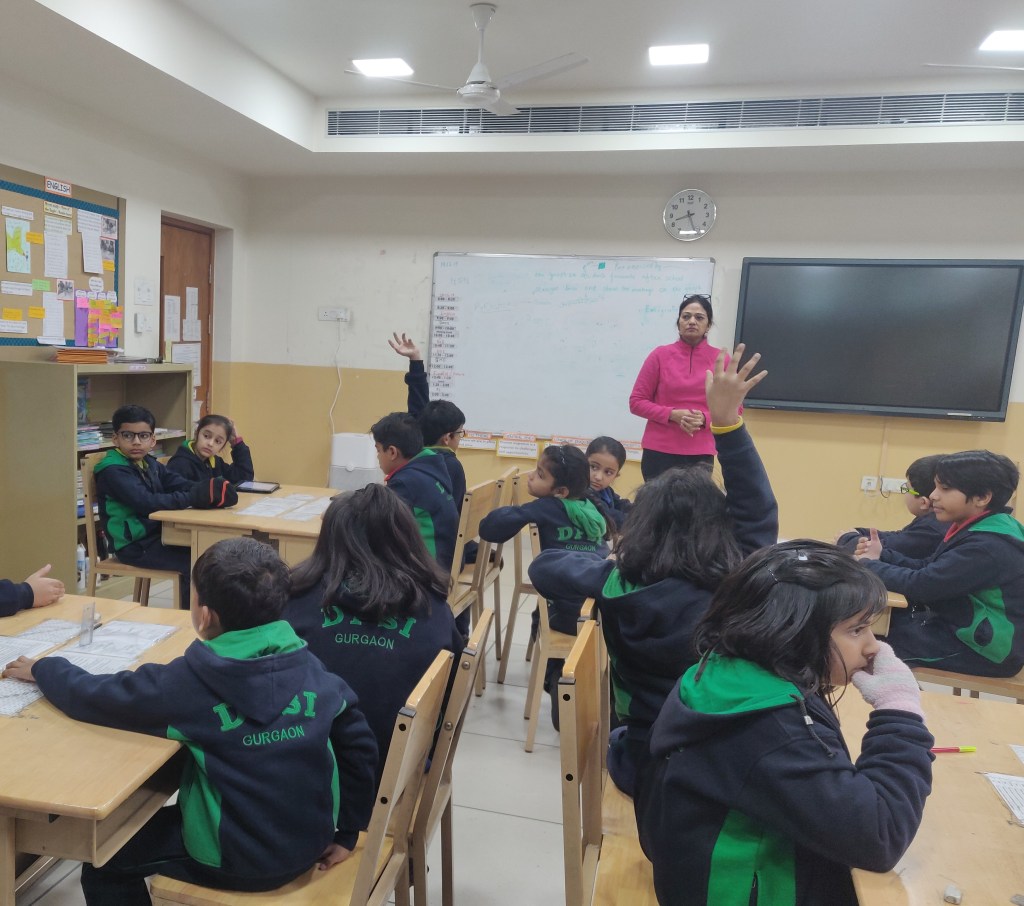
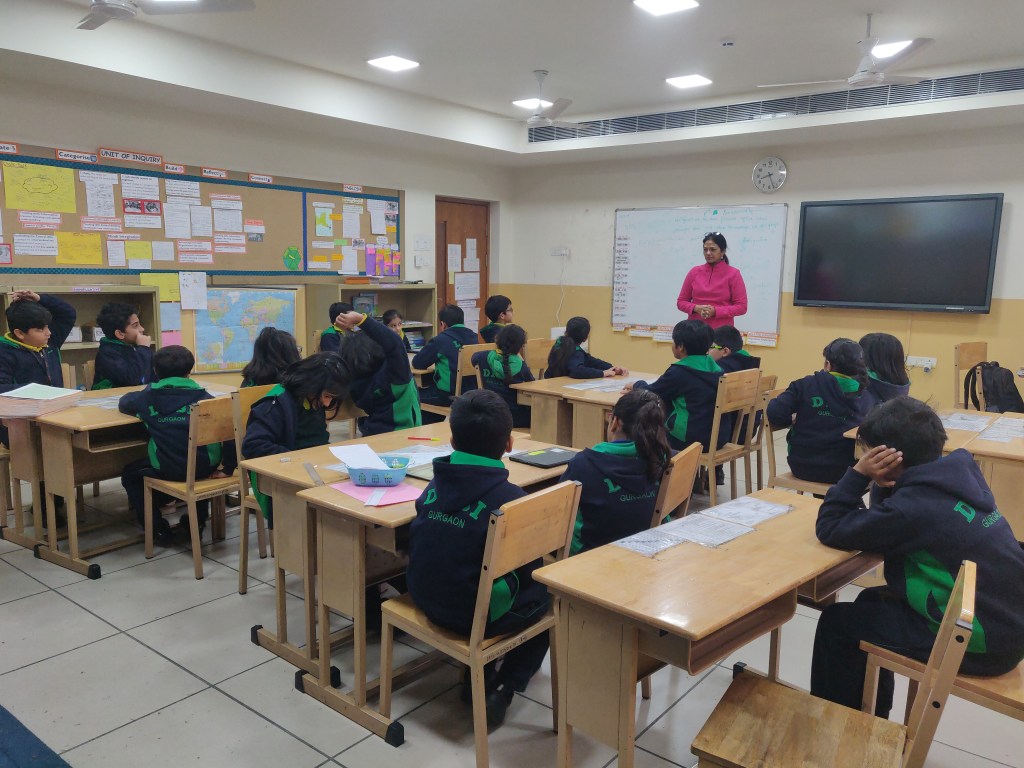
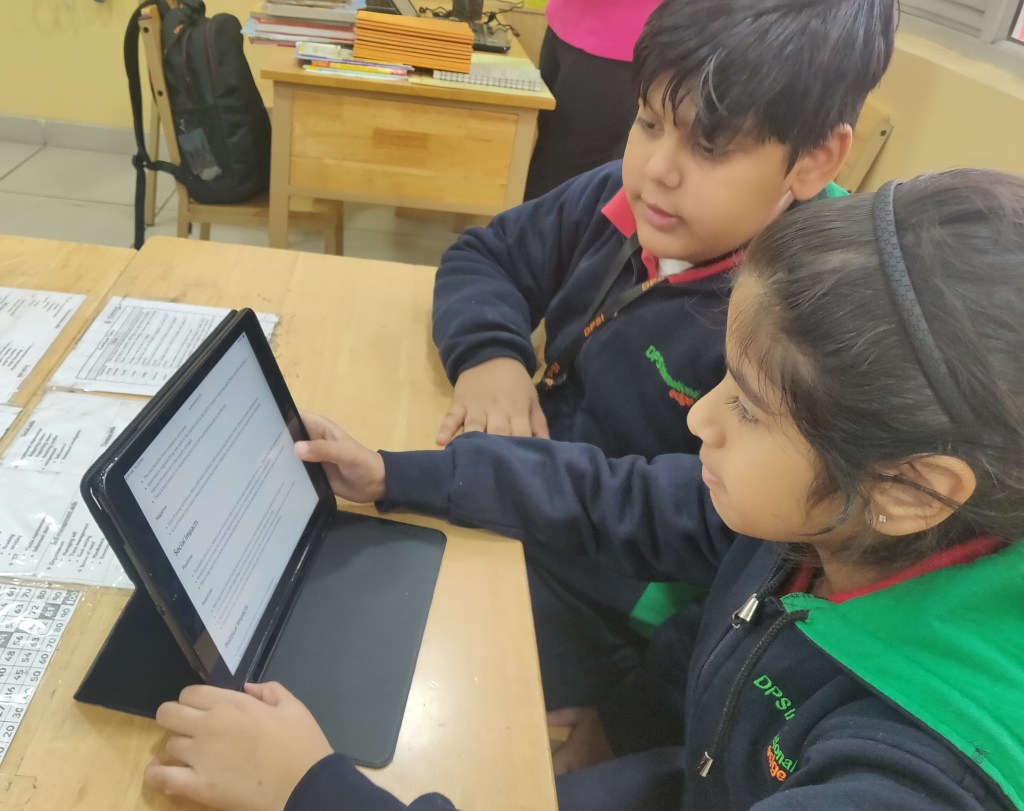
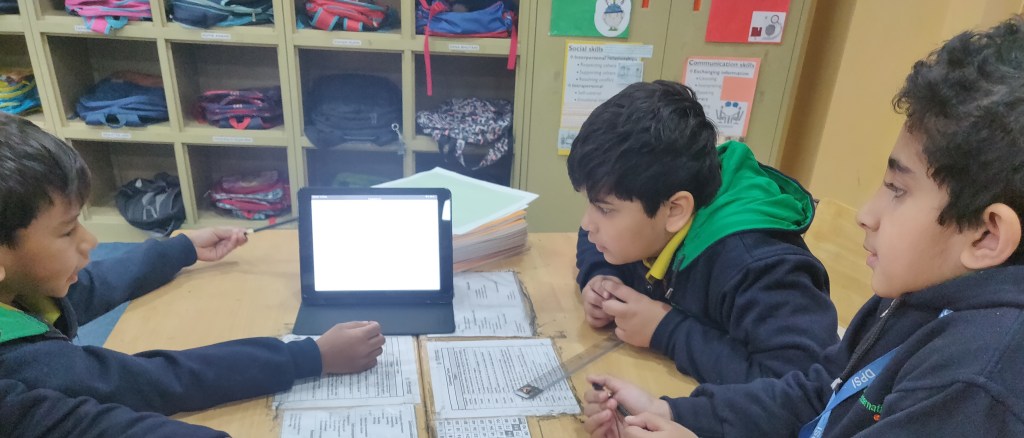
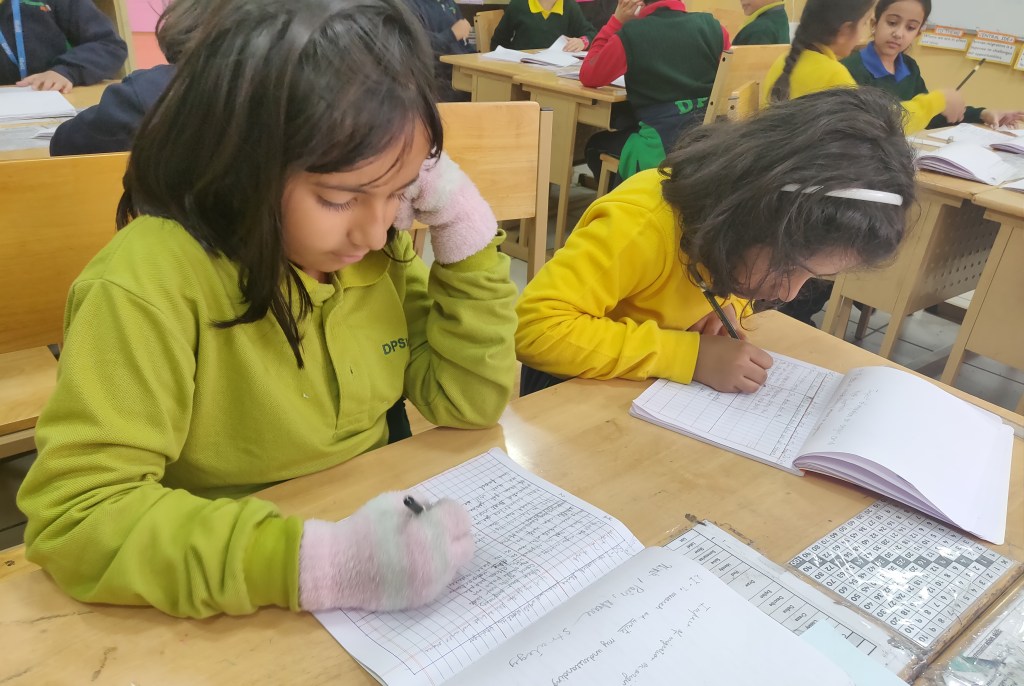
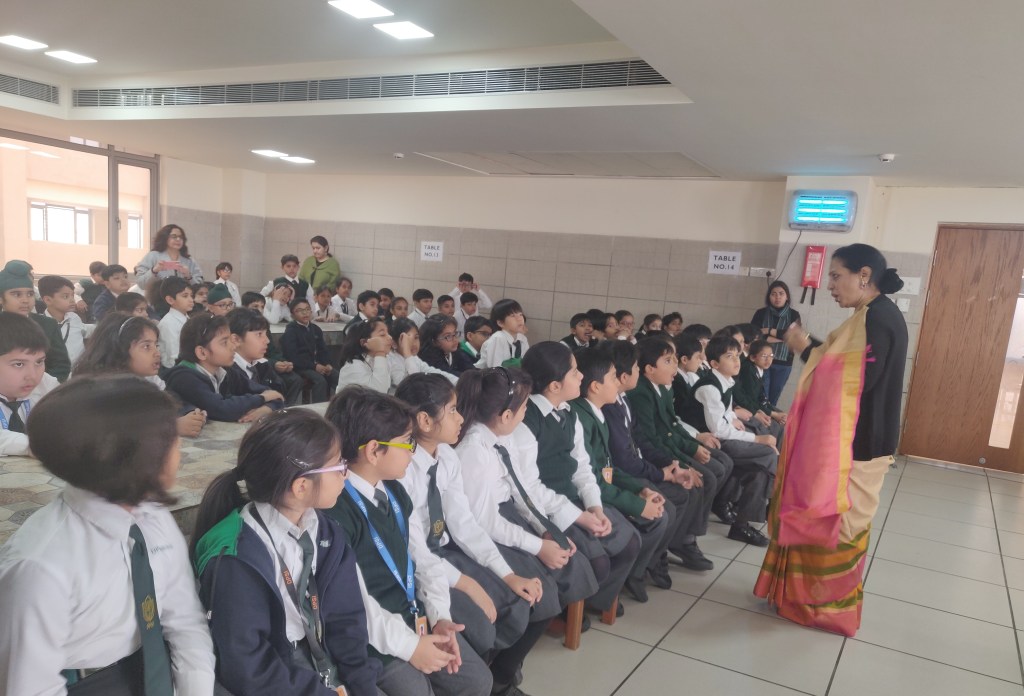
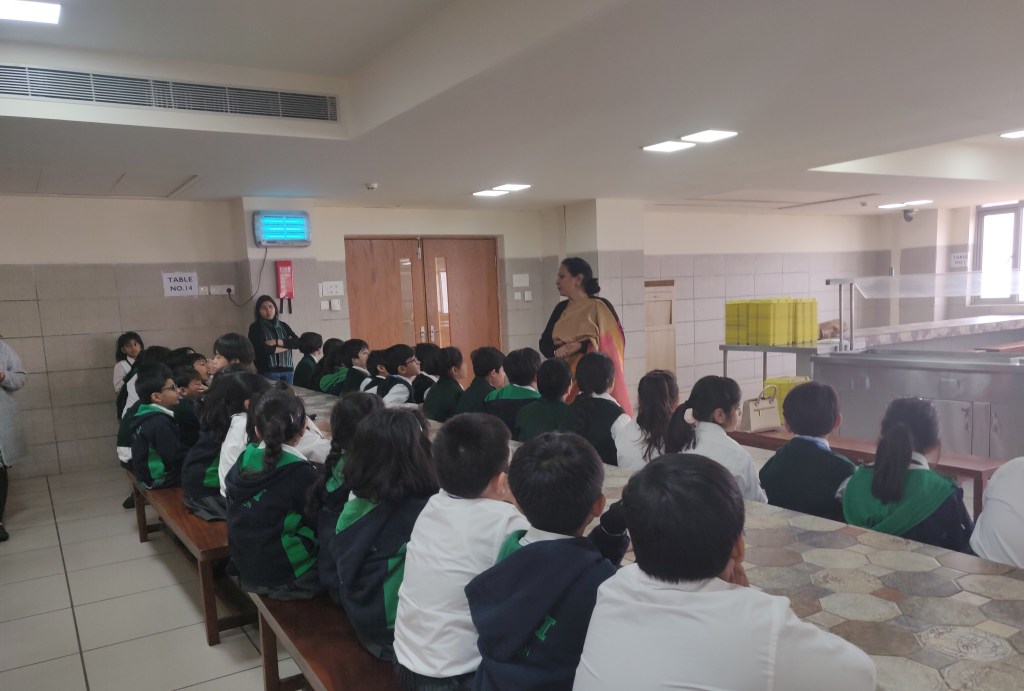
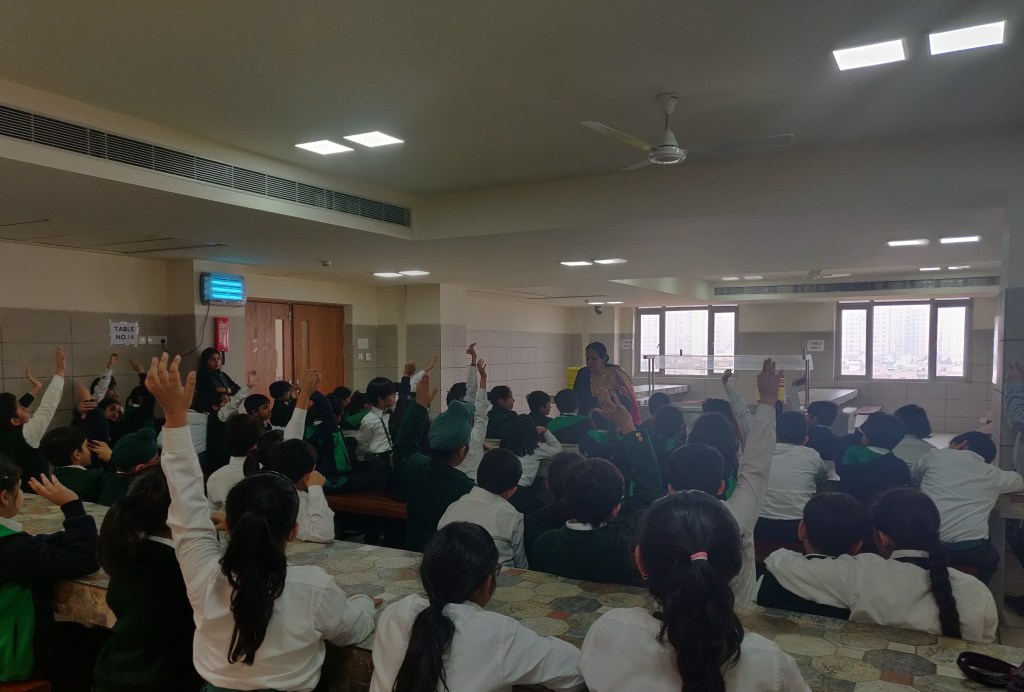
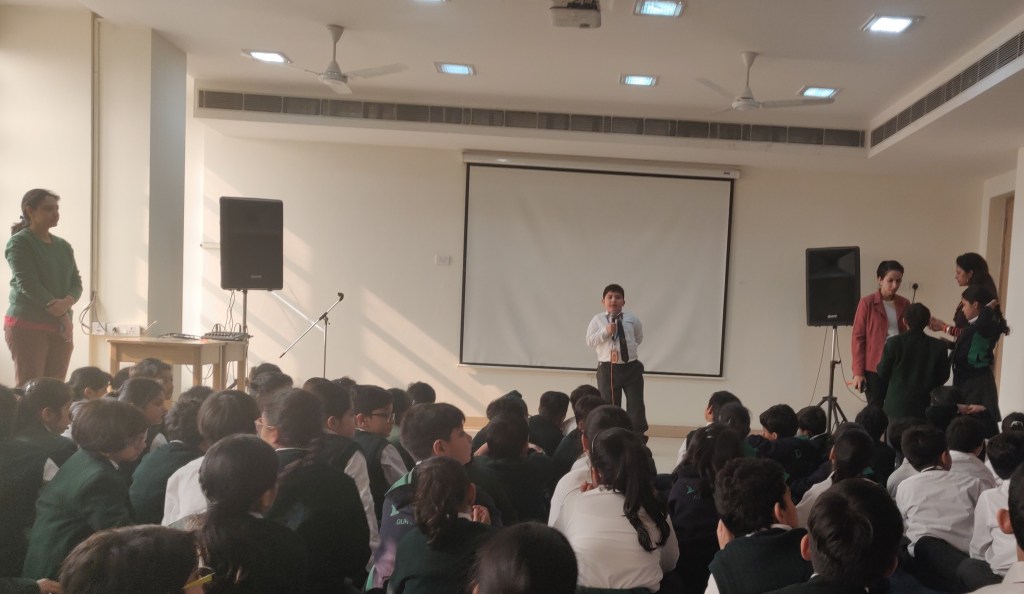
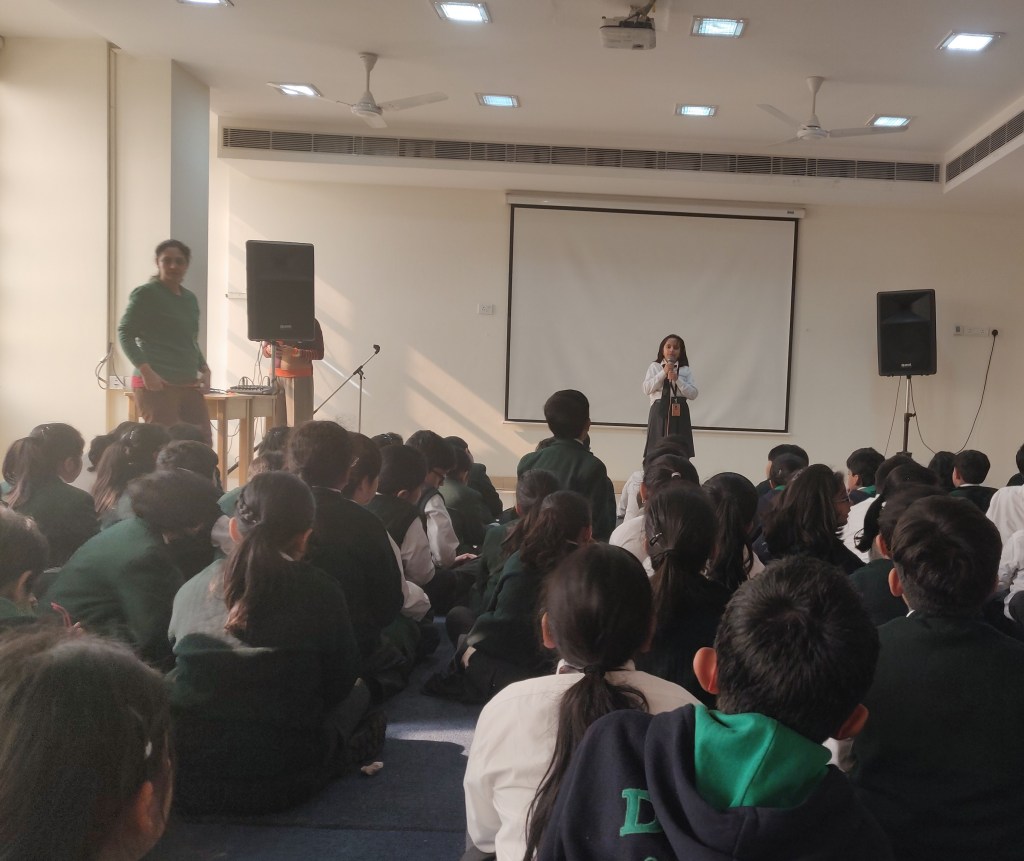
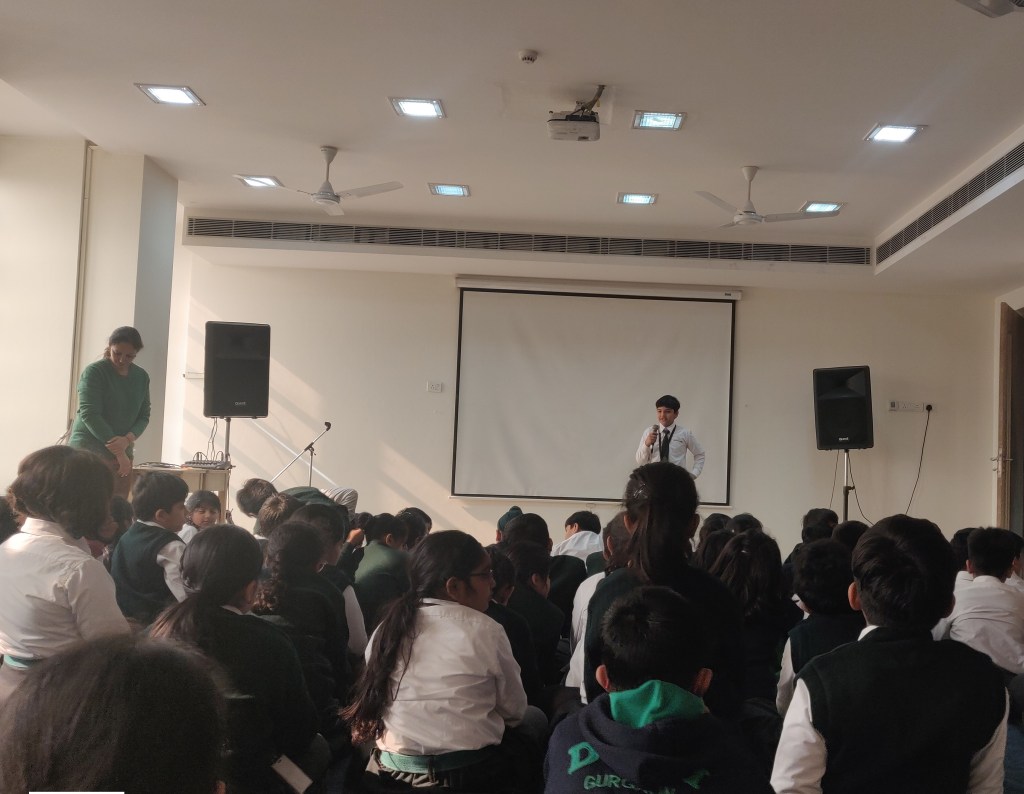
A parent shared her experience of migrating from Kashmir, interacting with her helped students better understand the emotional impact of migration and the push factors that precipitate it. The students themselves also exchanged stories about global, national and local migration and reasons for the same.

A million migrations: Journeys in search of jobs
Origins and Destinations of the World’s Migrants, 1990-2017
California Gold Rush of 1849 Forced to Flee – Children on the move
Mathematics
The students strengthened their understanding of subtraction and were introduced to word problems with 2/3/4-digit sums with borrowing.
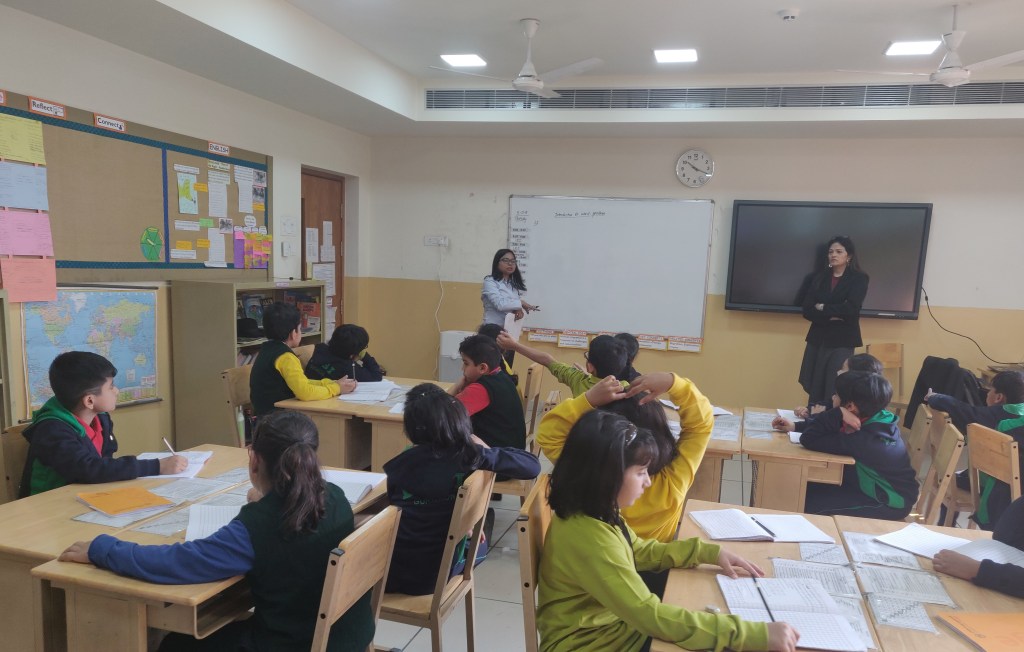
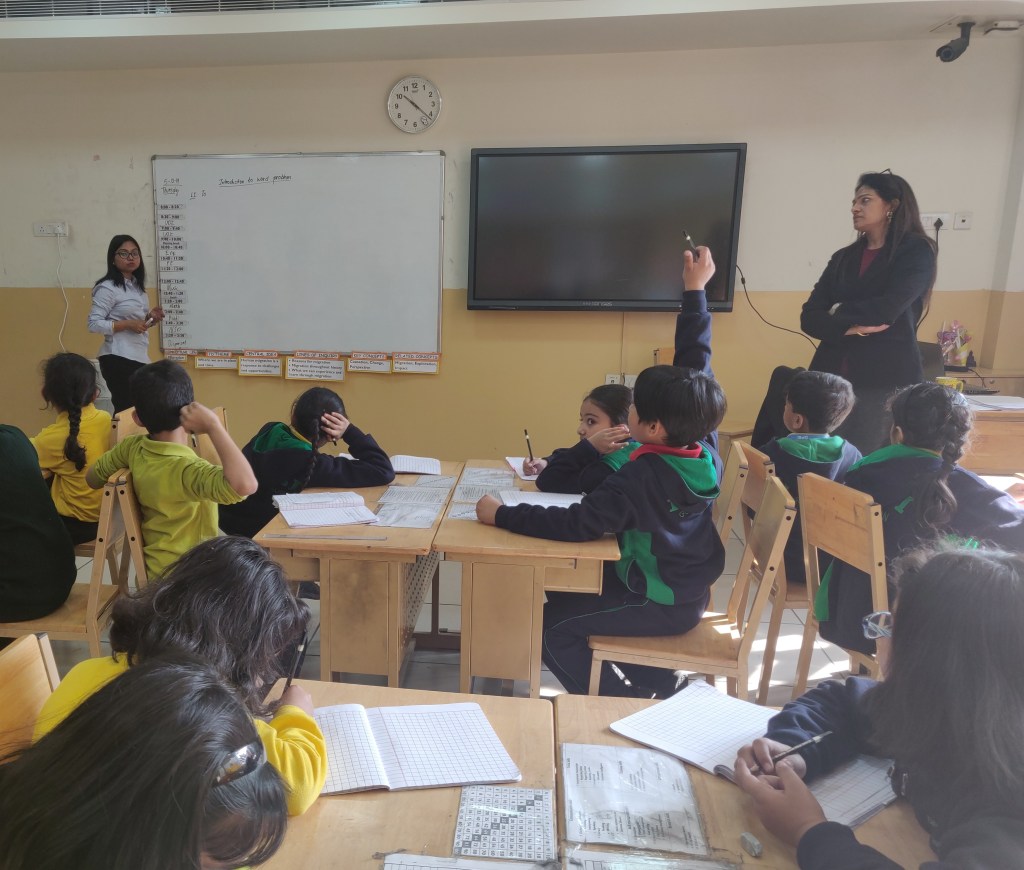

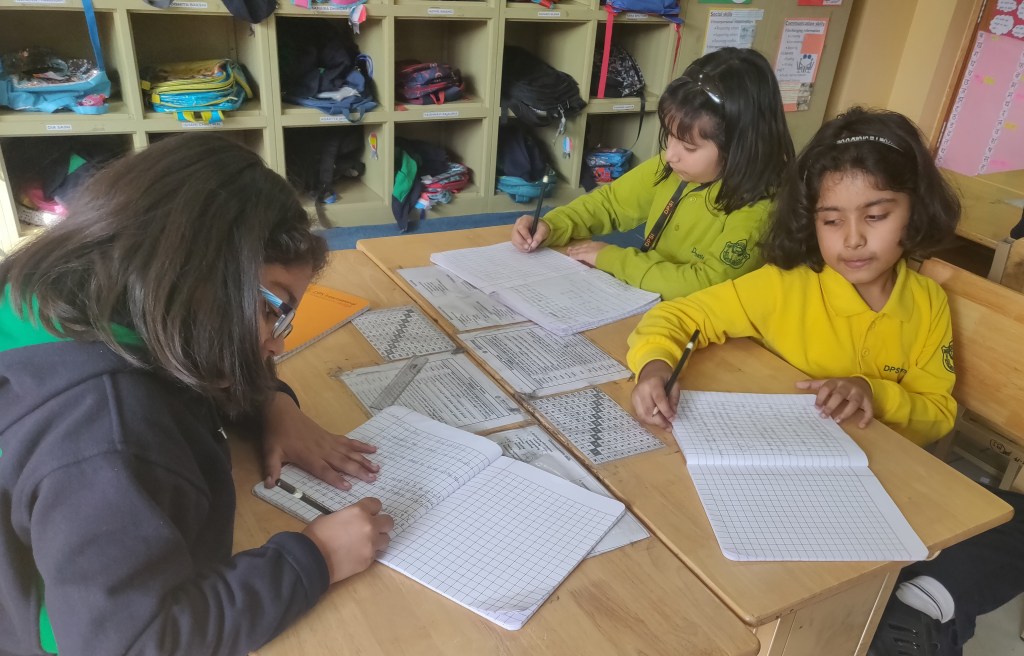
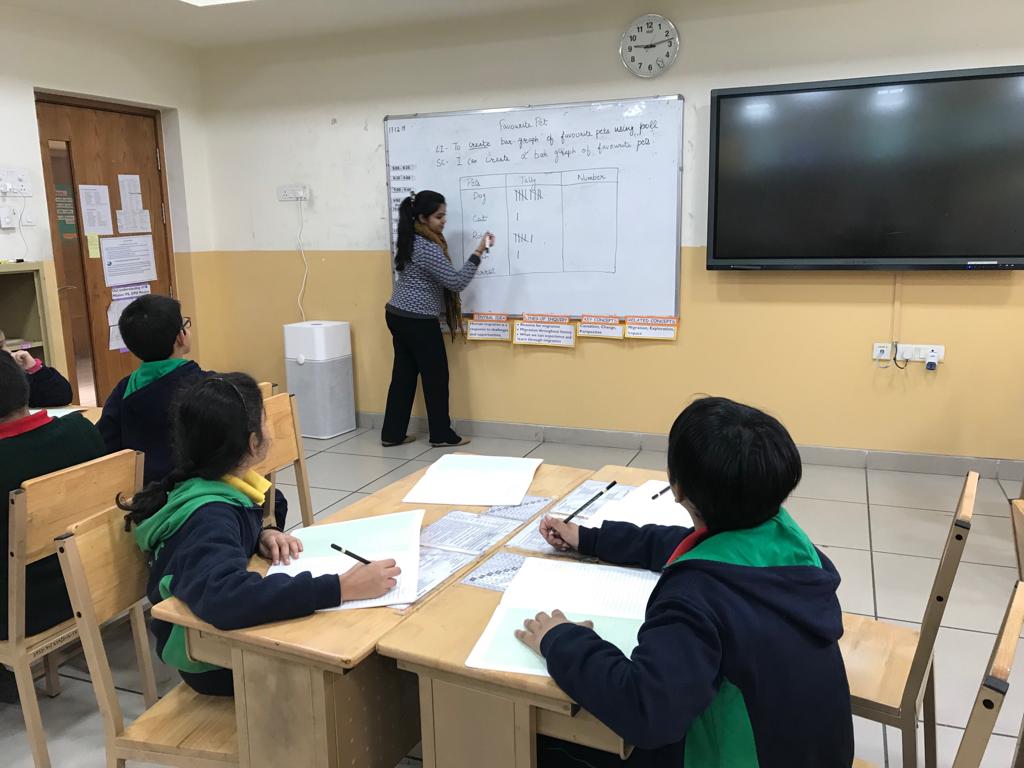
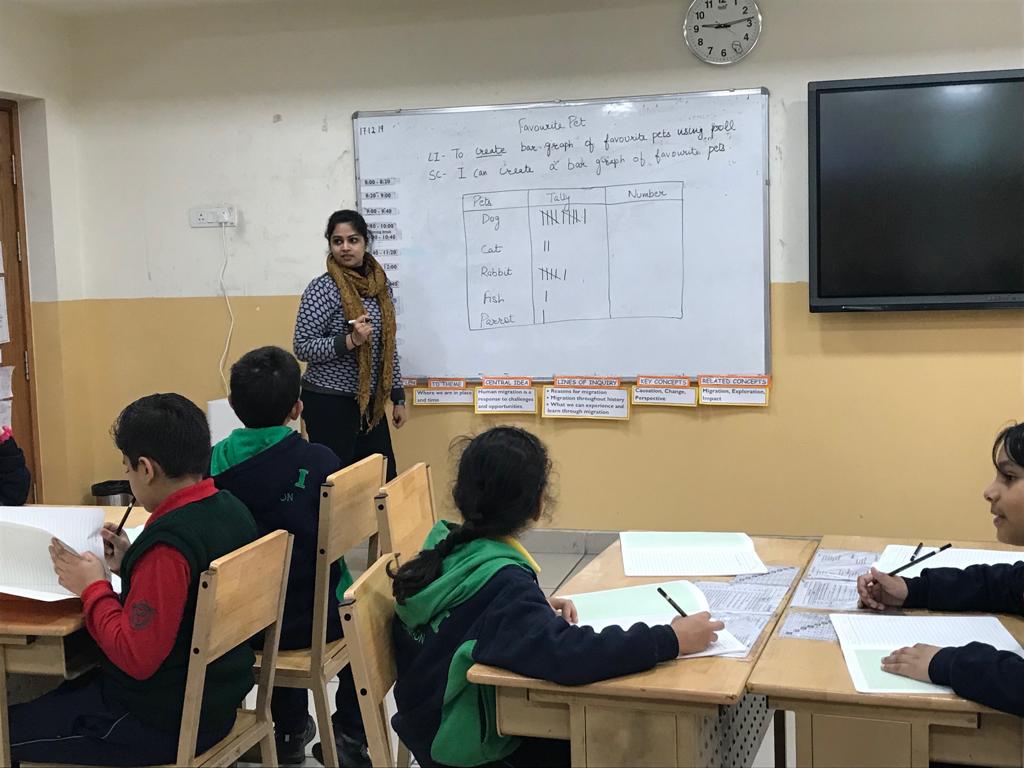
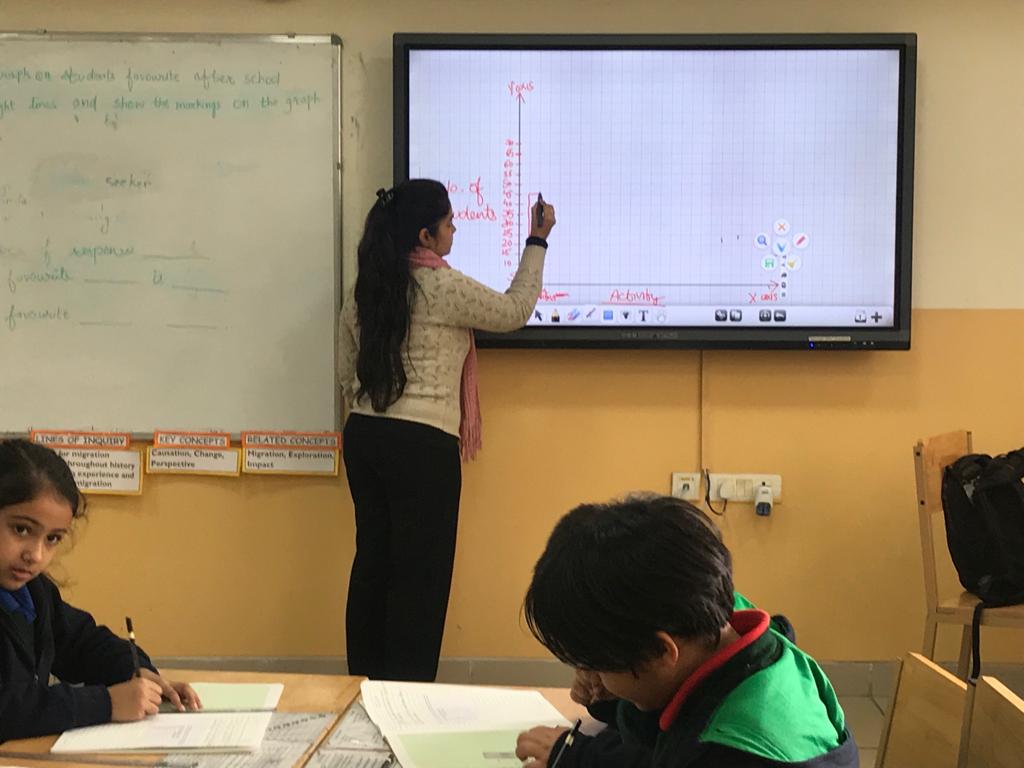
They were initiated into bar graphs by a pair activity ‘Knee to knee, eye to eye’ where they discussed terms related to graphs and why data in a graph is easier to understand than in tabular form.
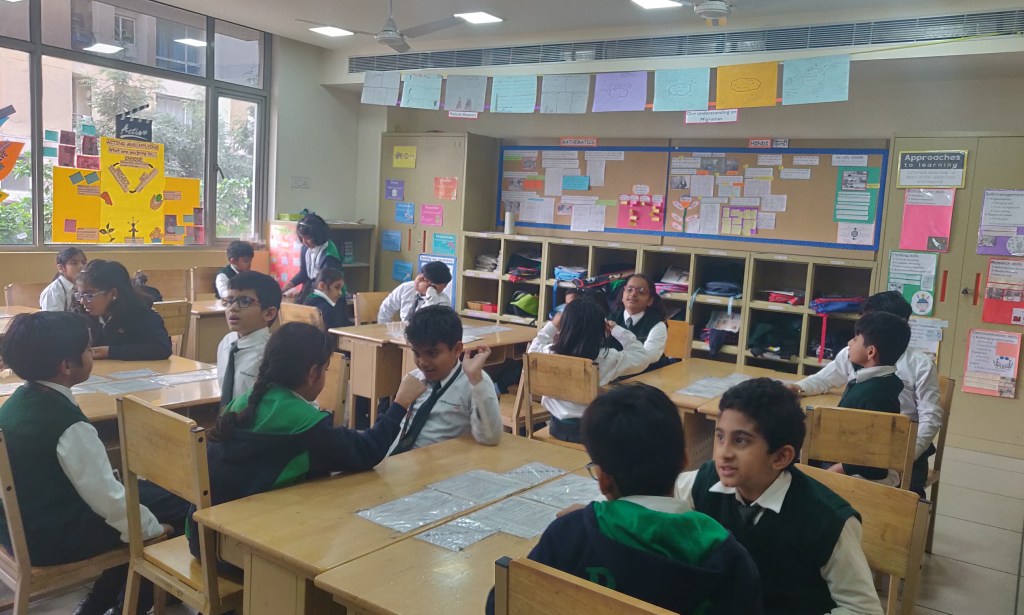
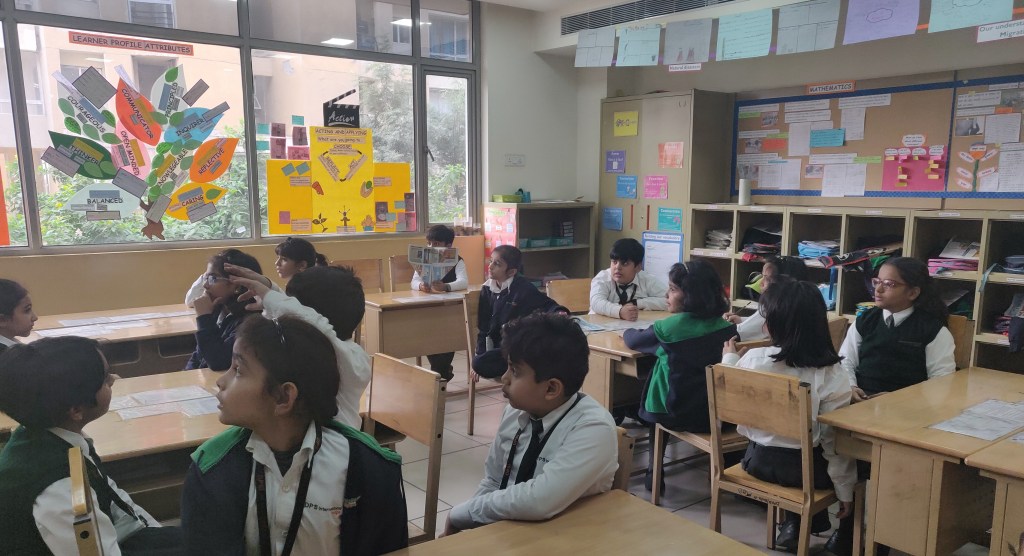
They learned about the parts of a bar graph such as title, horizontal and vertical axis, scale and bars. Representation on a bar graph with a quick poll based on the students’ favourite seasons/pets/shoe sizes was interesting. Tally marks were used and results recorded to make bar graphs. The group activity on data collection where students reviewed information and made bar graphs aided practice with labelling, plotting and analysing bar graphs by examining data on their favourite after school activity.
English
The students were introduced to opinion writing using OREO strategy for opinion writing.
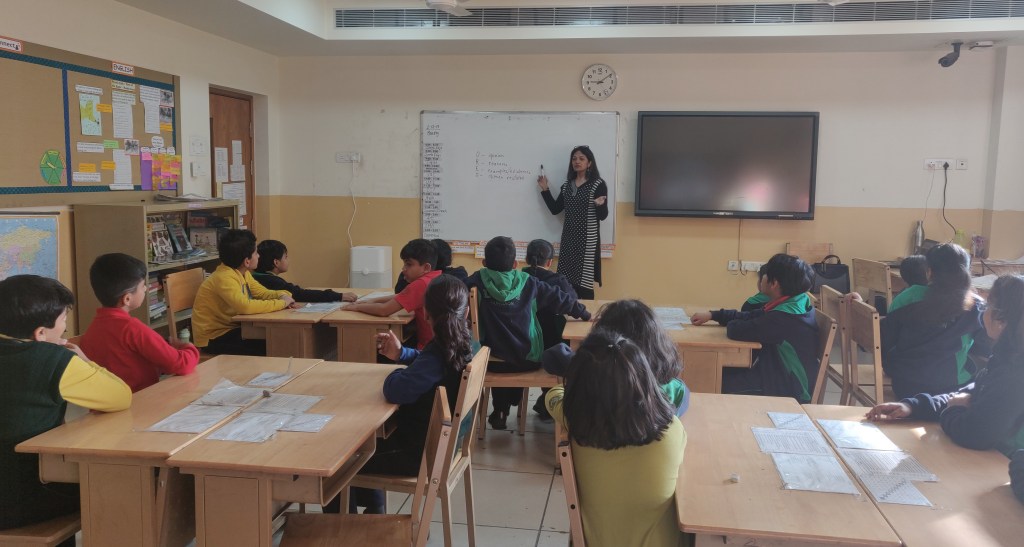
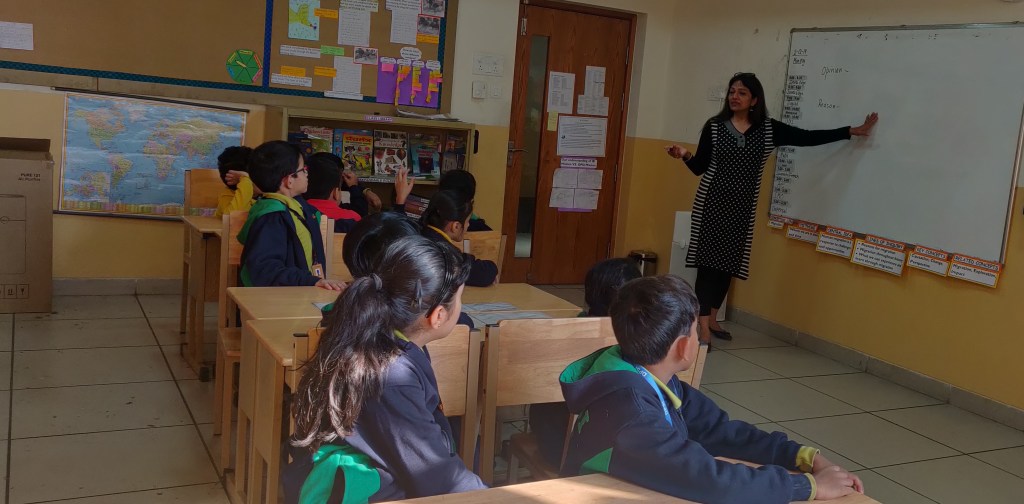
They reflected on the story ‘Going North’ through a visible thinking routine and also presented their case study experience to the class. They observed that migration is an entirely individual experience with unique reasons and situations for different families. They took the initiative to create a checklist for opinion writing after a group discussion.
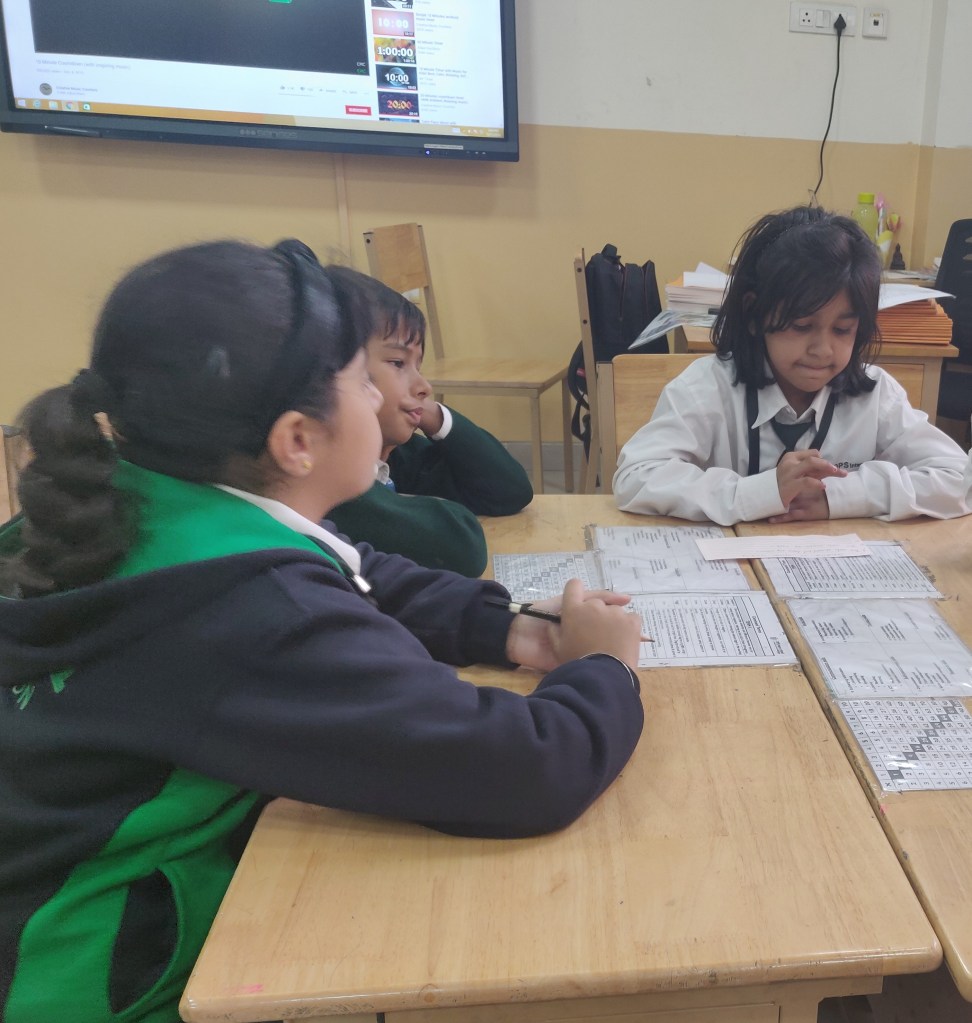
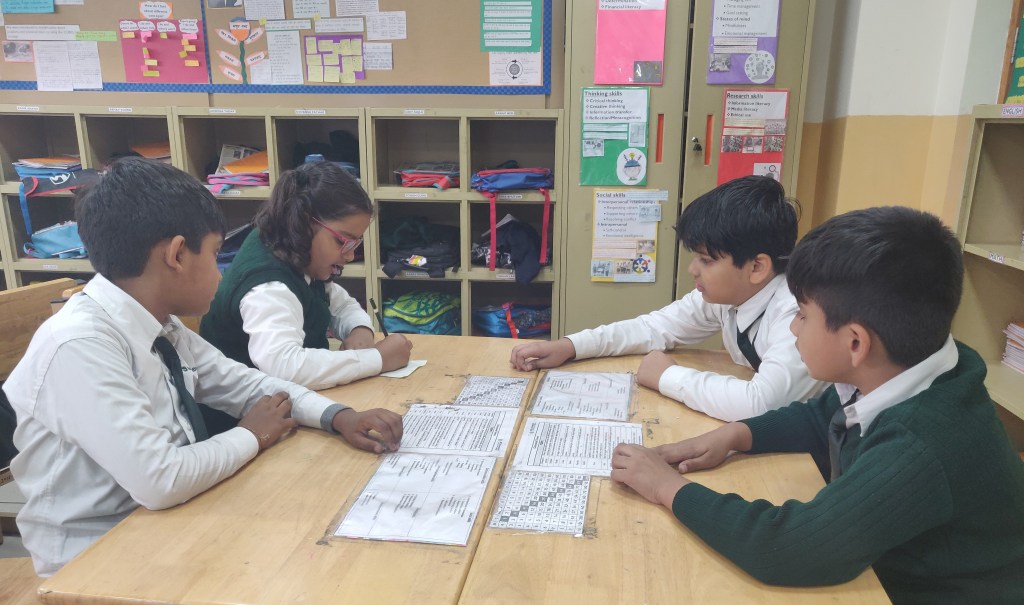
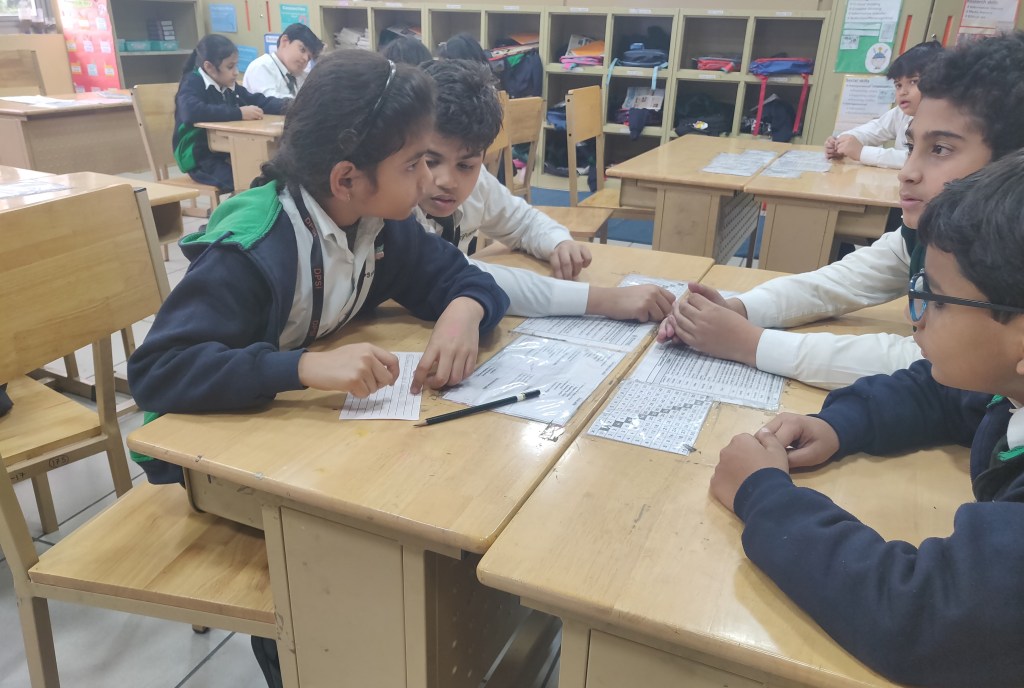
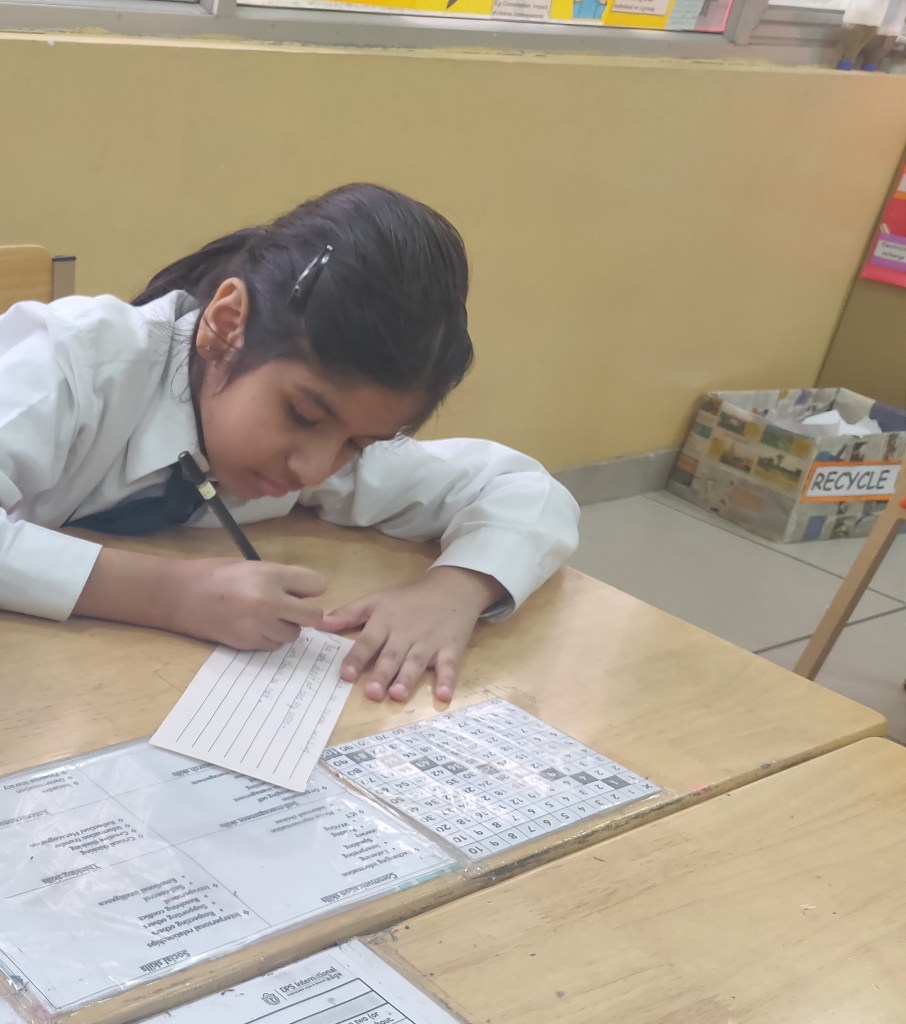
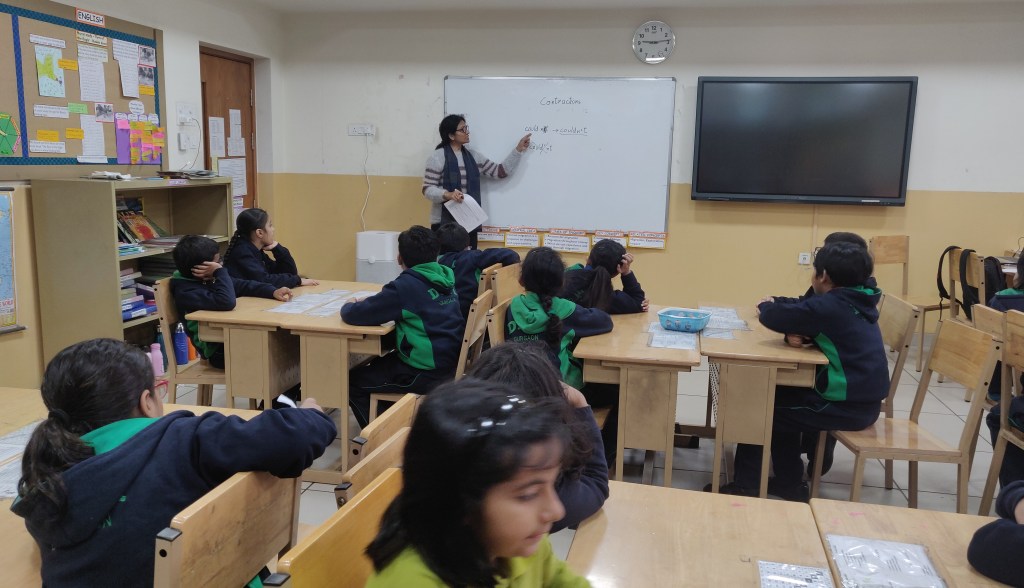
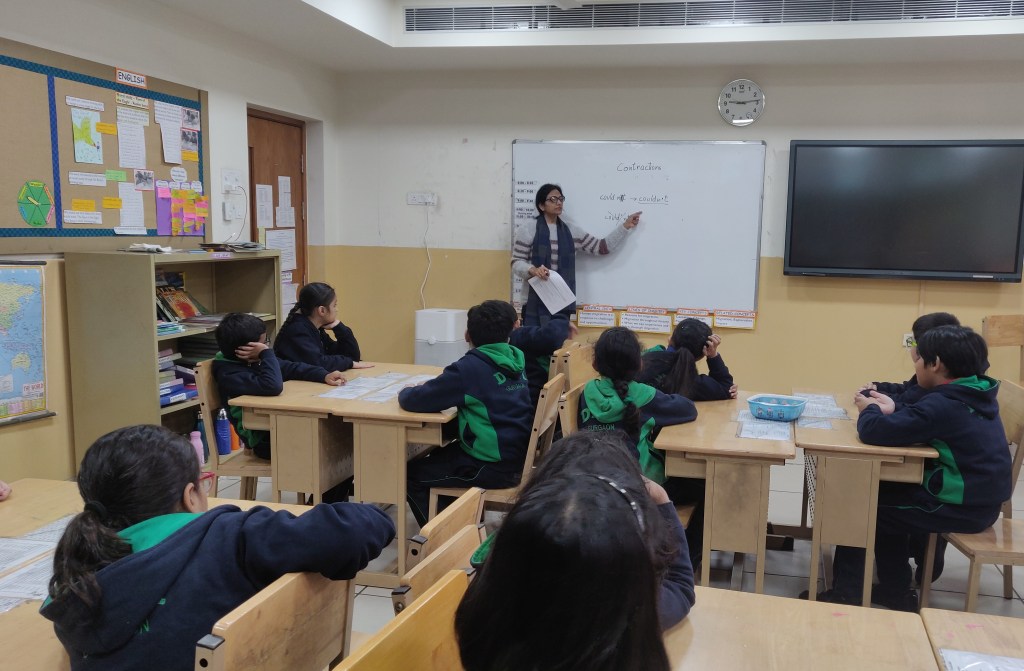
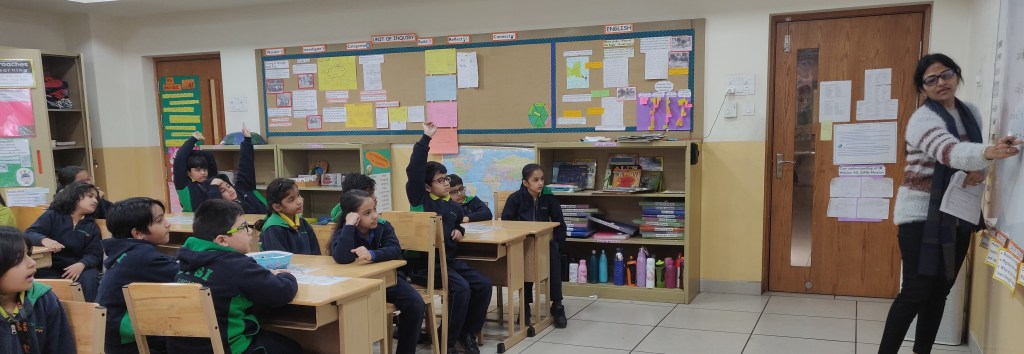
The students were introduced to contractions. They discussed various contractions and root words that form them. Students wrote a reflection on the Eco Adventure camp experience using at least two or three contractions of their choice.
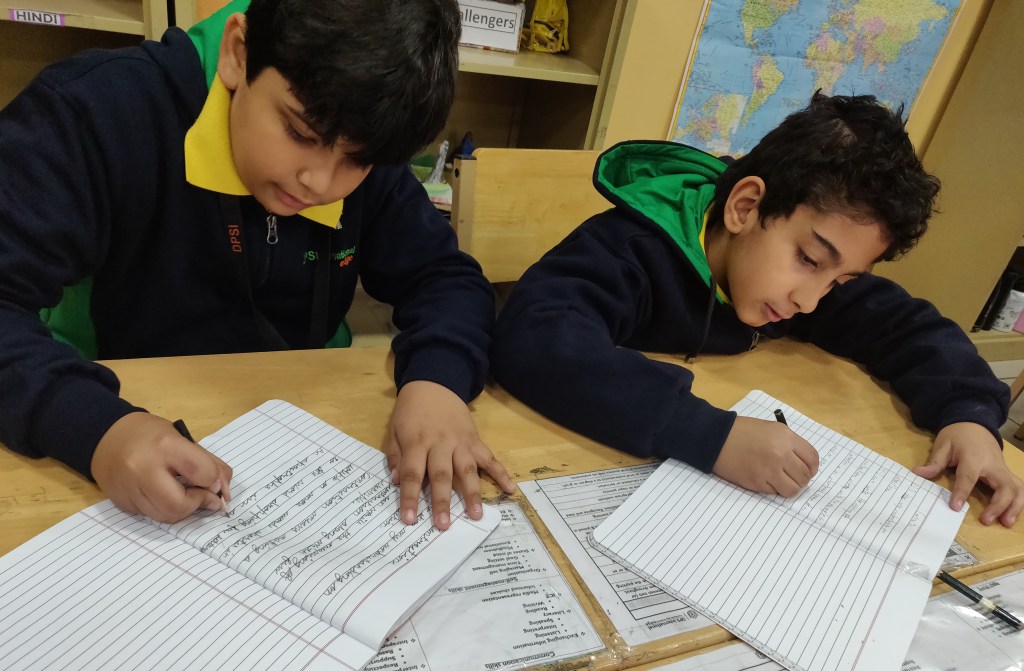
Hindi
During their Hindi lessons based on the migration unit, students viewed a video ‘आग वाली मछली’. They also attempted a ‘listen and tell’ activity which helped them to make meaningful connections. A read aloud story session, ‘रंगीन पक्षी’ helped them to enhance their reading and comprehension skills. Students displayed their thinking and self-management capabilities by working in groups.

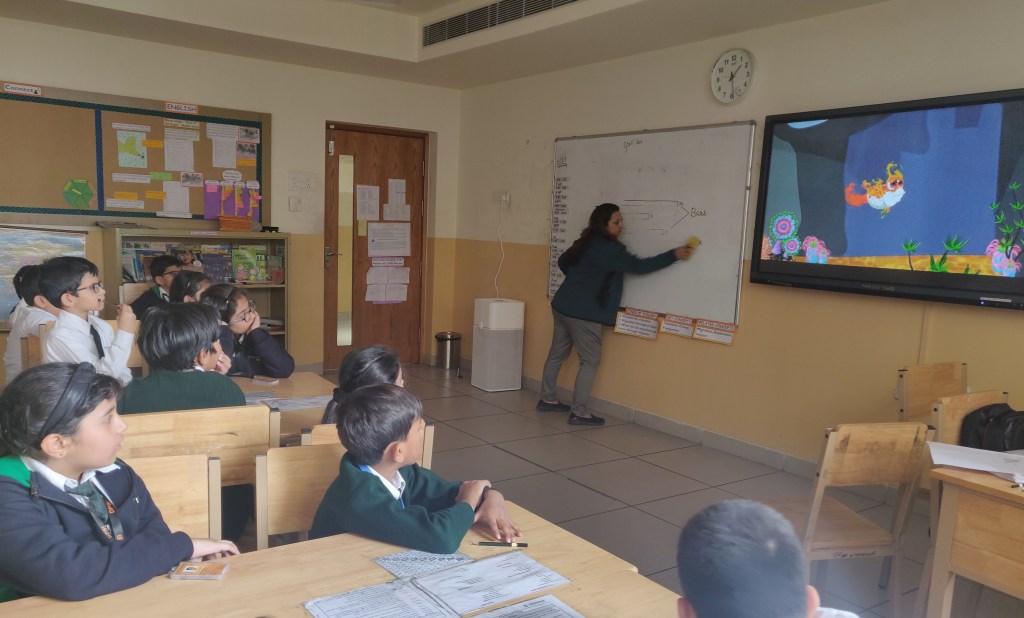
Hindi ab-initio
Students enhanced their reading skills by studying words and sentences with ‘u’ maatraa. To strengthen their writing skills they participated in a spell bee of words and sentences with badee ‘ee’ ki maatra. To improve their speaking skill they played name, place, animal, thing, and learned sangya shabd. They watched a video of ‘Pitajee aur ghadha’ which they then narrated. They engaged in a roleplay of the story ‘Saras aur kenkda’.
French
Learners inquired and made connections about migration to France and other countries. They performed tasks in an organized manner and within the given time frame, hence developed their self-management skills. They listened, spoke, read and wrote new vocabulary words to enhance their communication skills.
Spanish
For Spanish lessons, students recapitulated self-introduction and learned the days of the week, months and seasons. Students were made to pay attention to an audio presentation and then asked to elaborate on the meaning of the words with its correct pronunciation.
Library
Students read and interpreted Carson Ellis’s award winning translanguaging book ‘Du Iz Tak?’ The picture book focussed on a group of bugs who discovered a new sprouting plant. They watched it grow and change through the seasons.
The uniqueness of this literary work , it’s imaginative use of language made interesting read. Students could only infer the meaning of the dialogues. They applied their thinking, and imagination to interpret and decode the language.
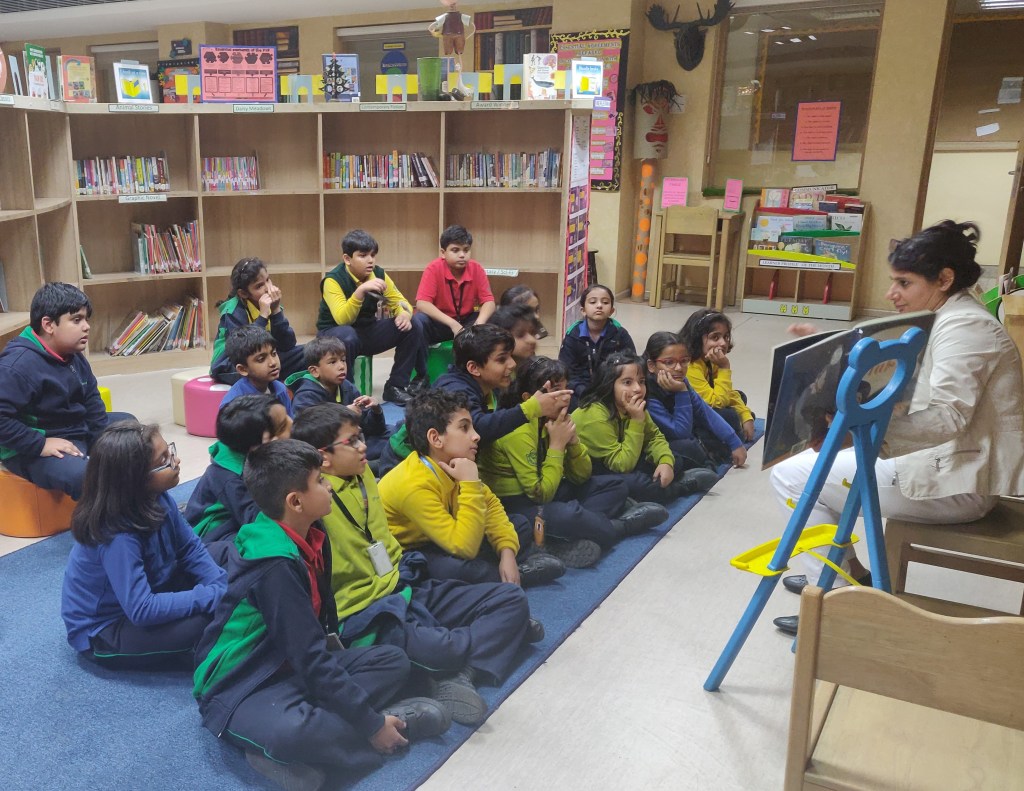
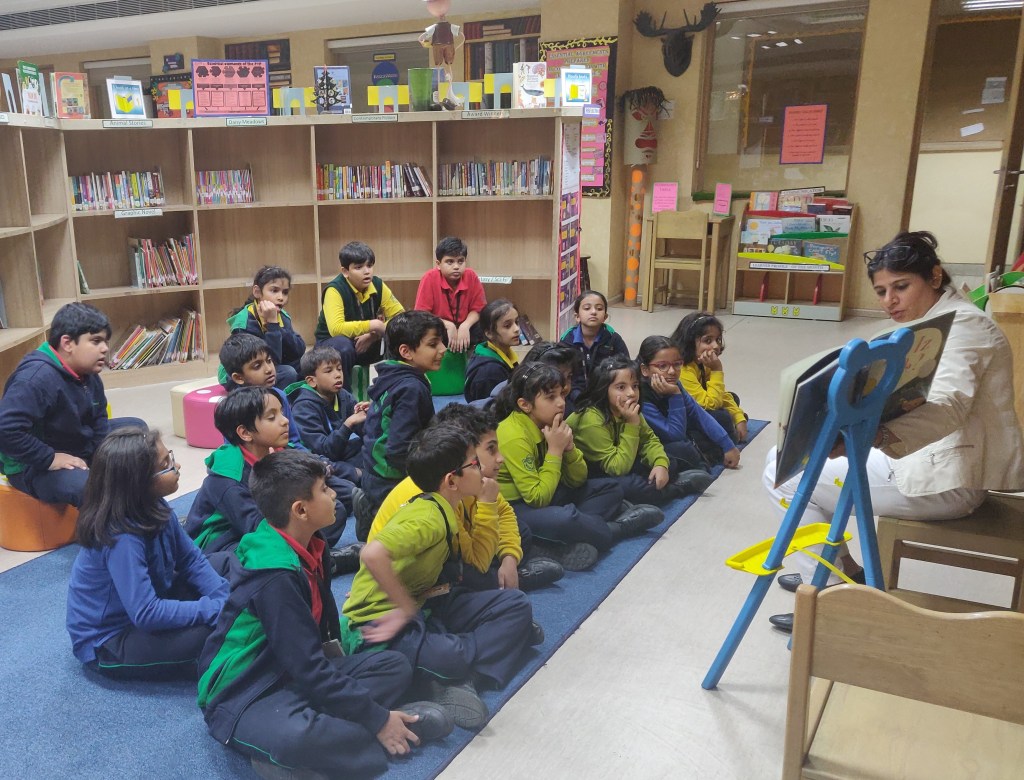
Students prepared a book using their understanding and a checklist that aided them to dabble in translanguaging. Guidelines like the story should have some made up language and illustrations must convey meaning of the story to the readers set expectations from the authors. The books created by students would be added to the Primary library collection for other children to read.
PHE
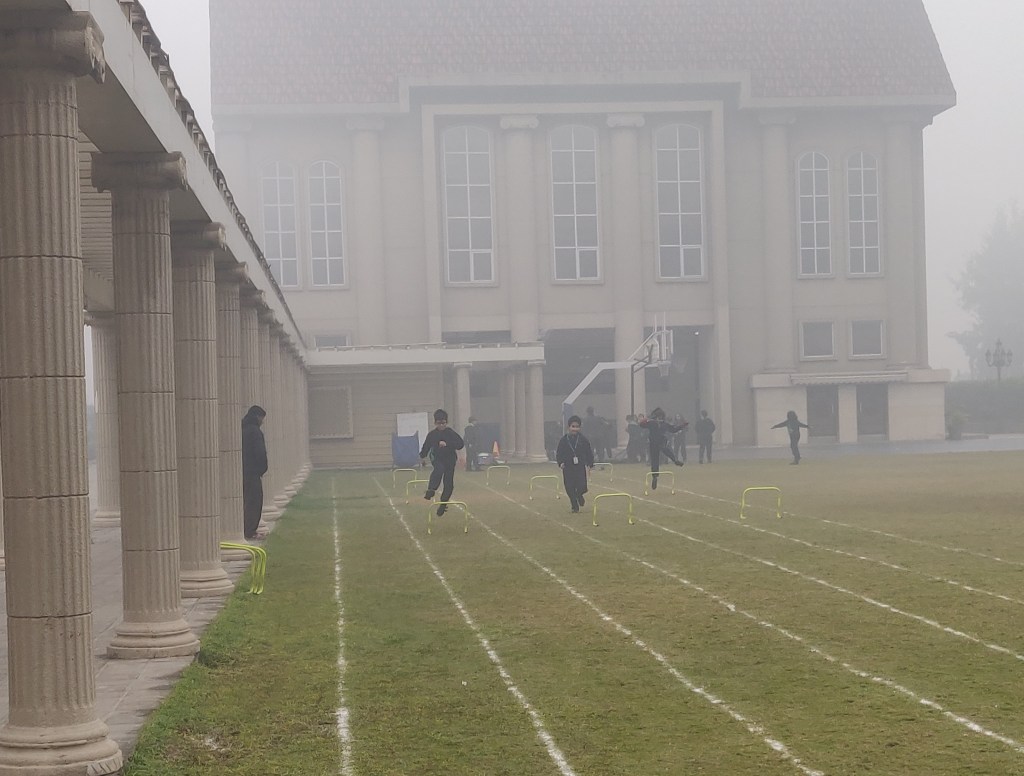
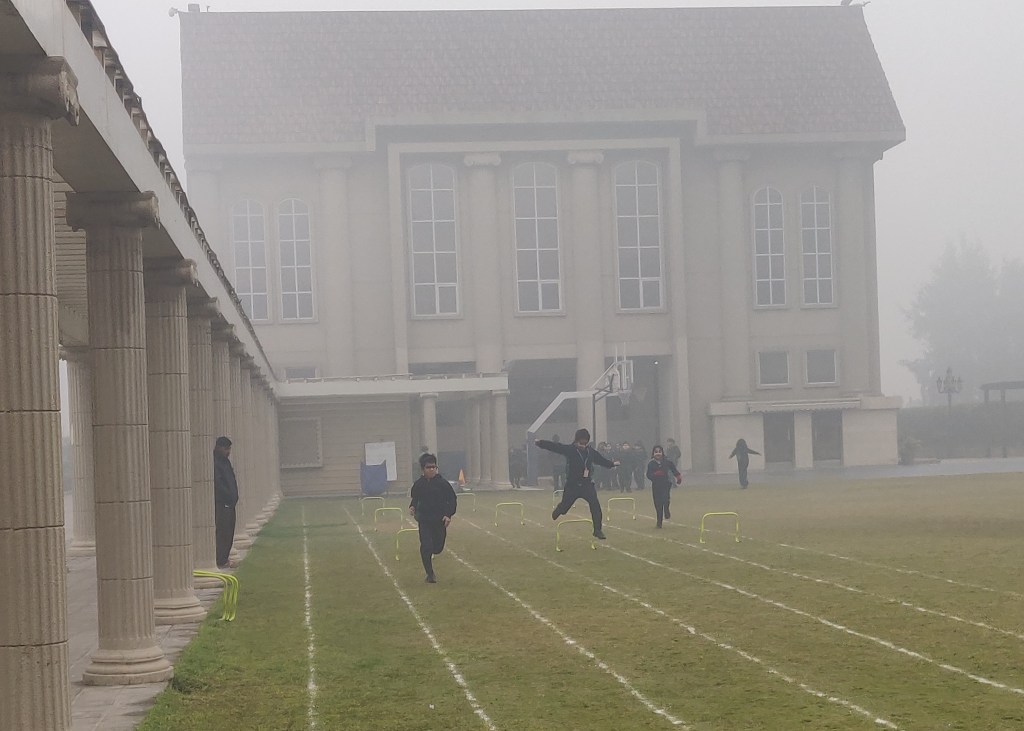
Students were introduced to ‘Athletics’ which involved sporting events that include competitive running, jumping, throwing, and walking. Athletics are commonly considered individual sporting events with the exception of relay races. Students practiced Athletic events like running, throwing and standing broad jump for the upcoming Athletic meet 2019-20.
Art
Students learnt about Indo Islamic art and created symmetrical patterns of the same using the line of symmetry. They also explored monochromatic art and have started to create a greeting card using monochromatic tones and Indo Islamic motifs.
Dance
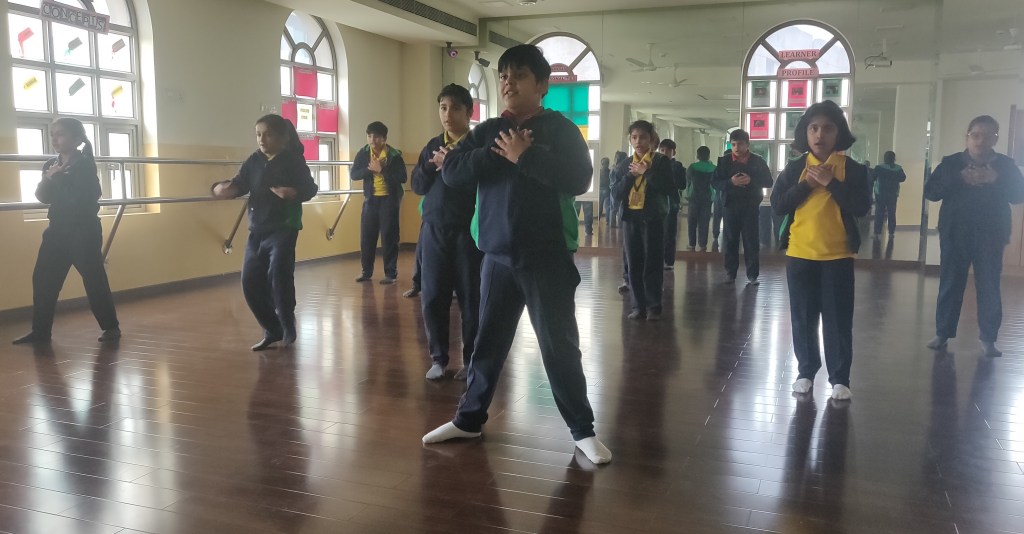
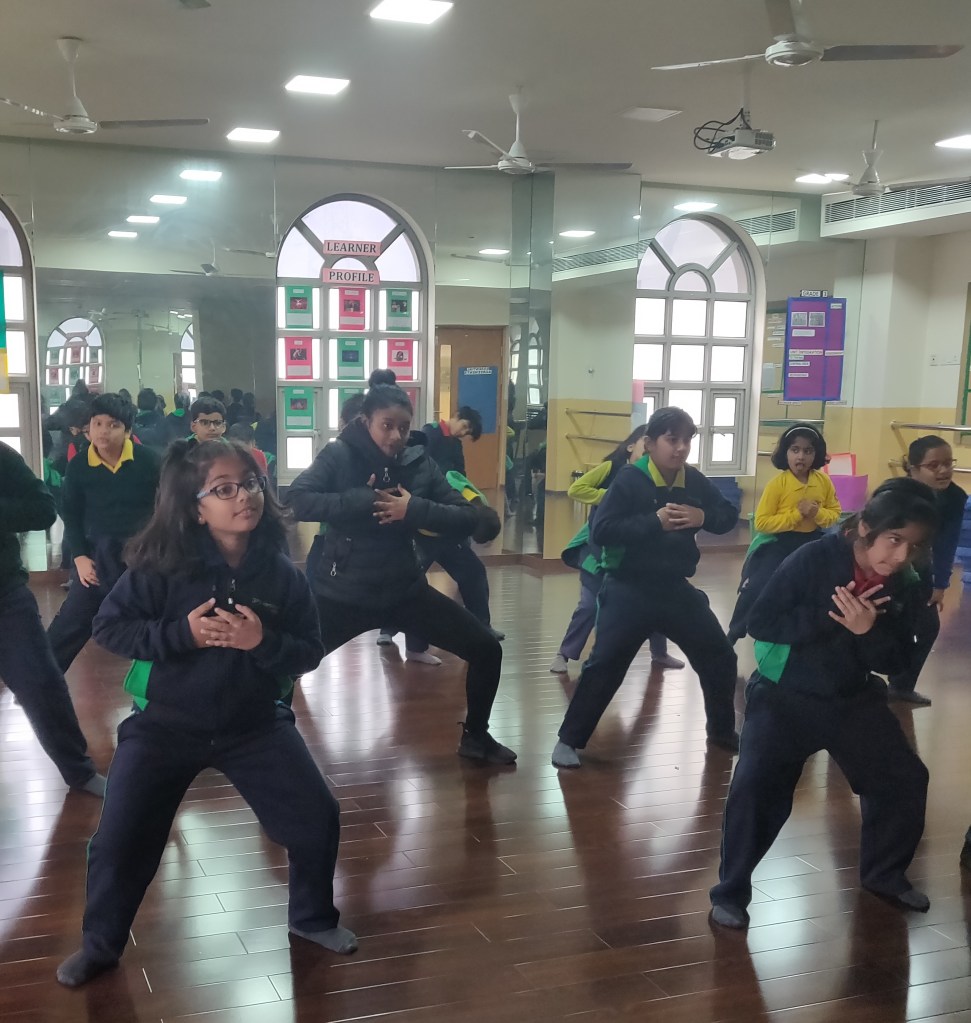
Dance Lessons were focused on the development of rhythm patterns and flexibility. Warm Ups and exercises were done to improve control and have a sharp hold on the steps. Students learned a new dance routine on the song ‘Thousand Years’.
Music
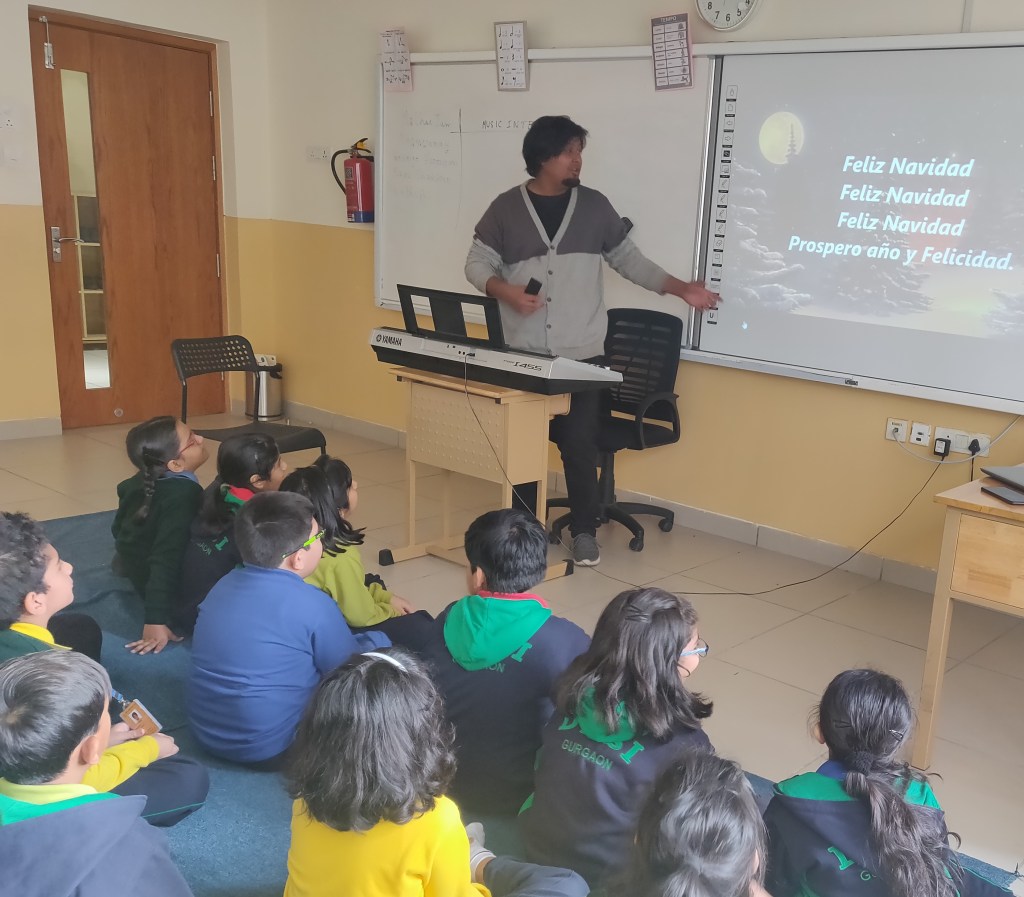
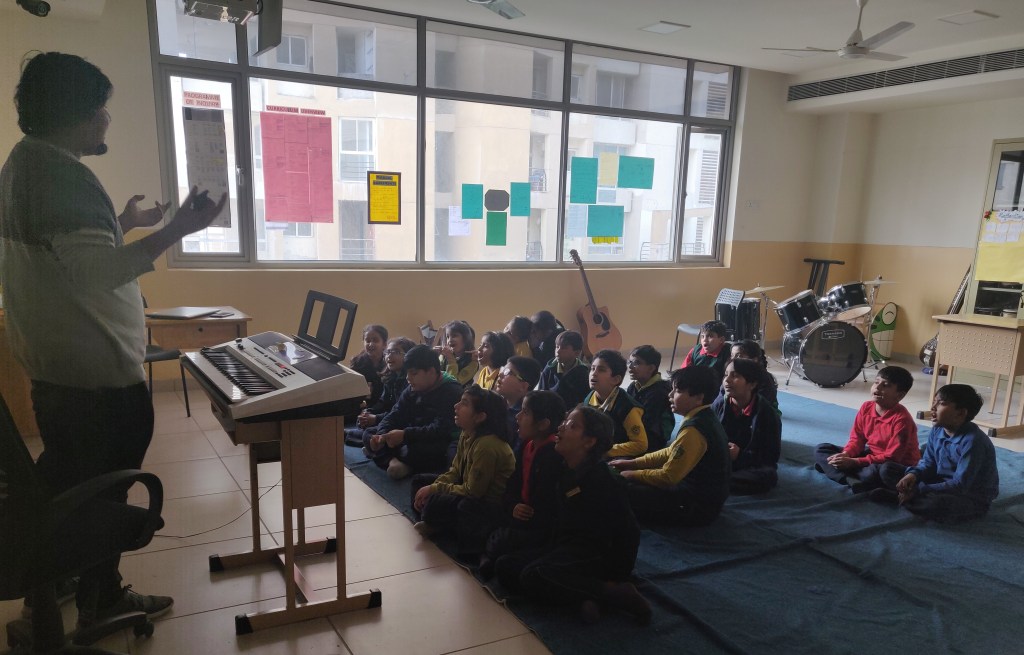
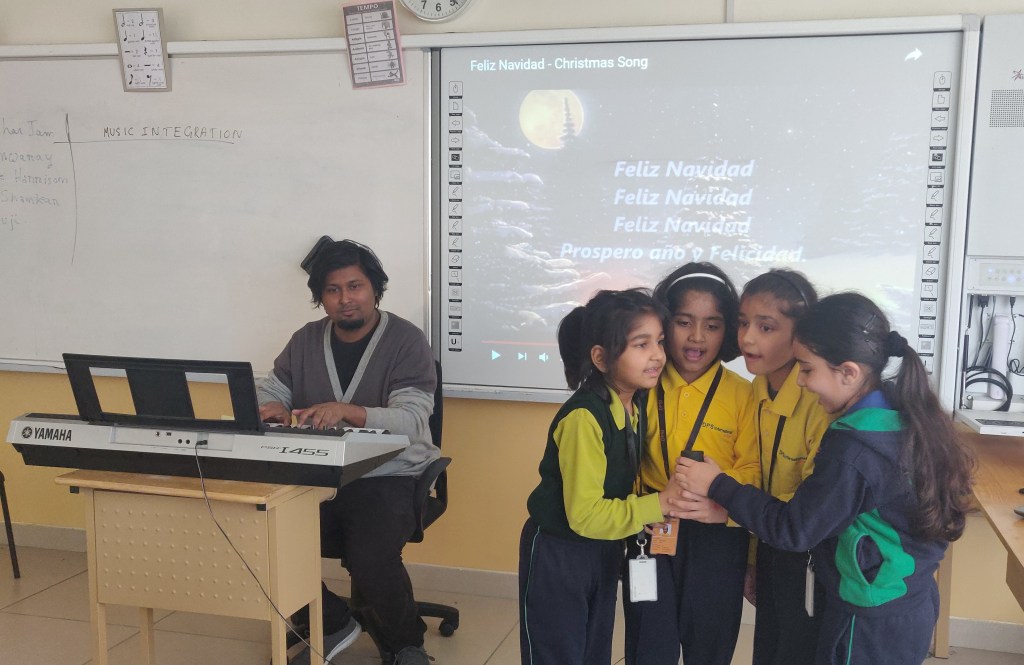
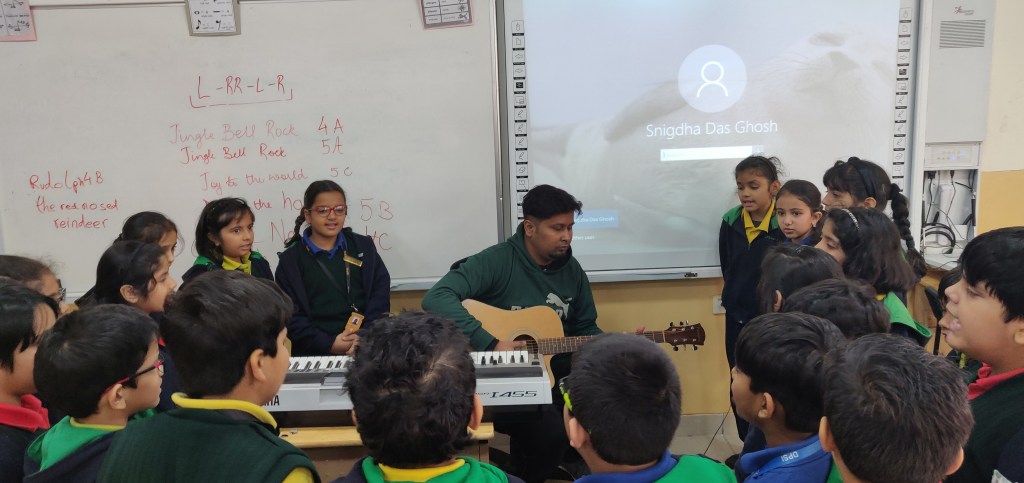
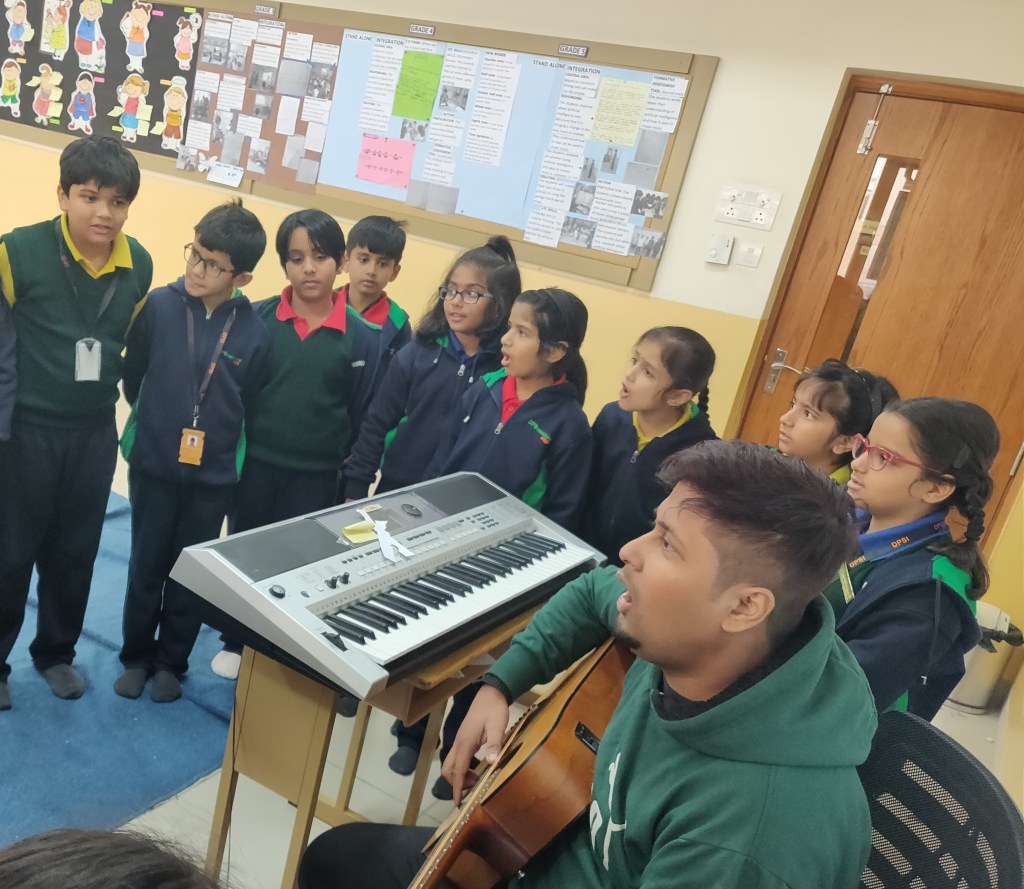
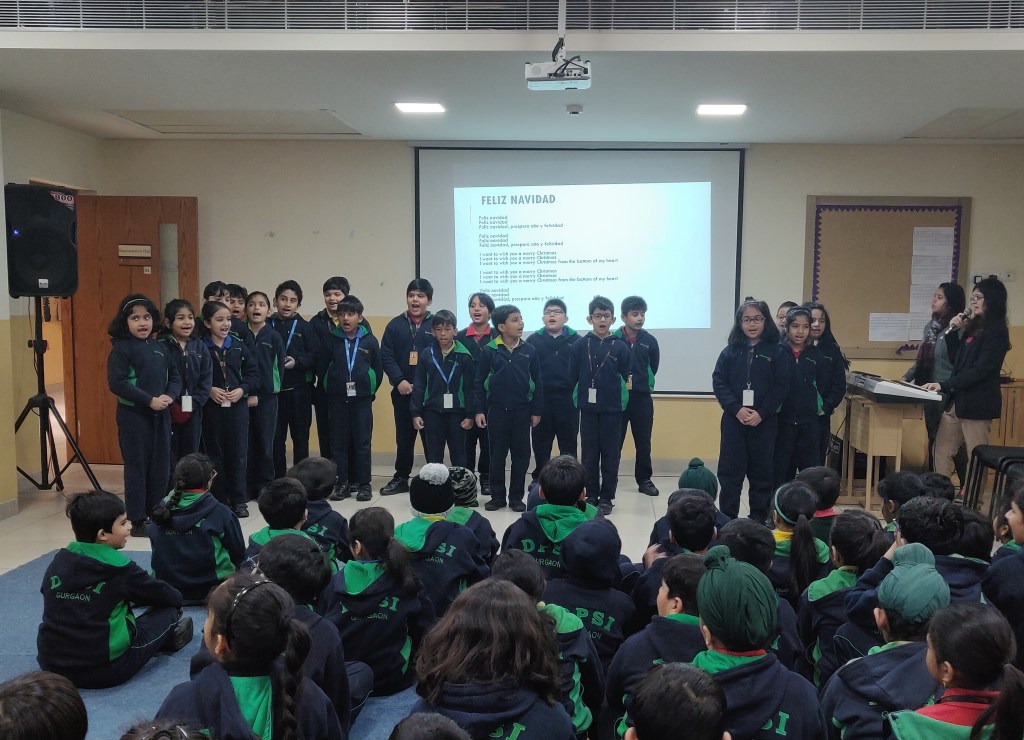
In the class students learned and sang christmas songs and carols, they also revised on notes and note values.
Here are the links to the songs :
ICT
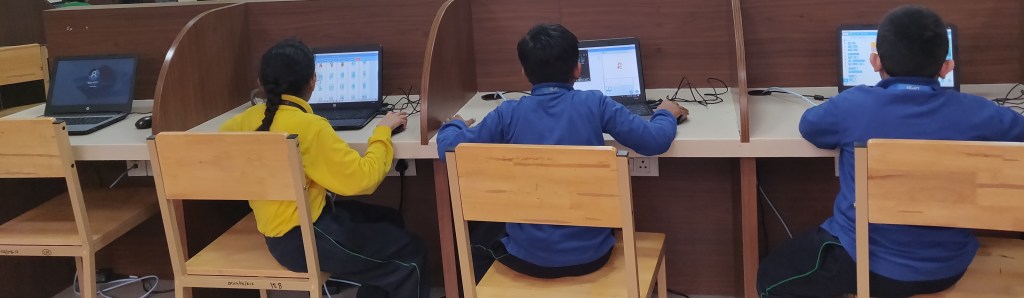
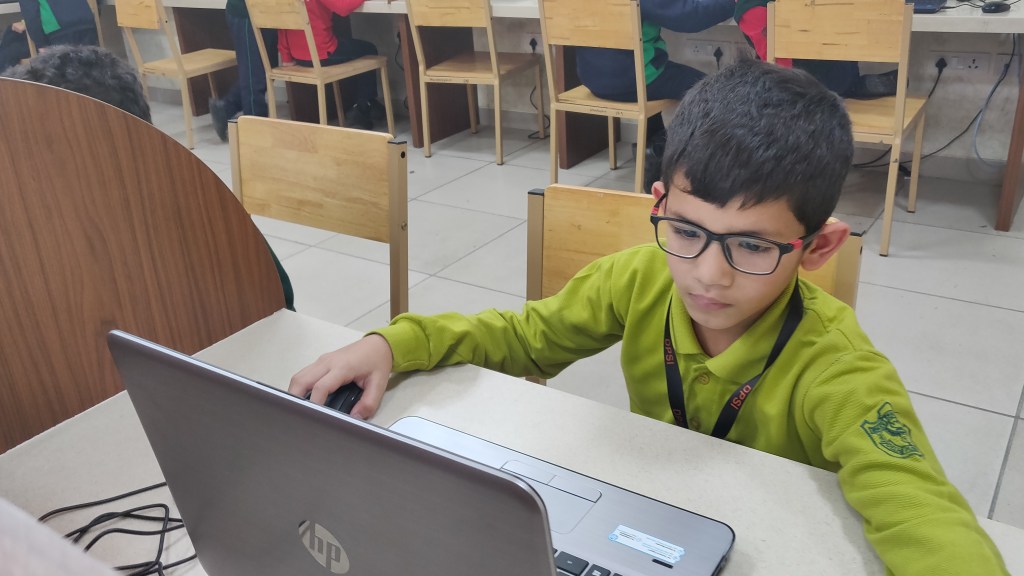
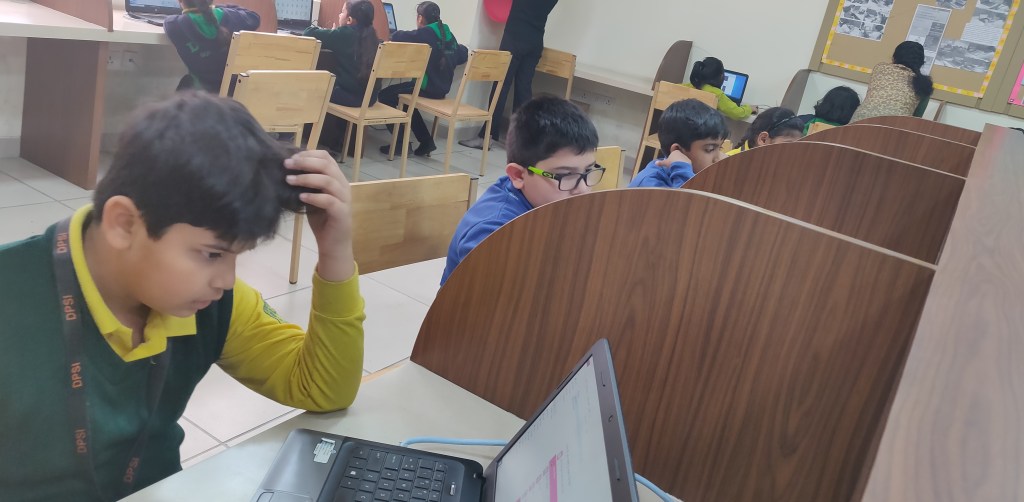
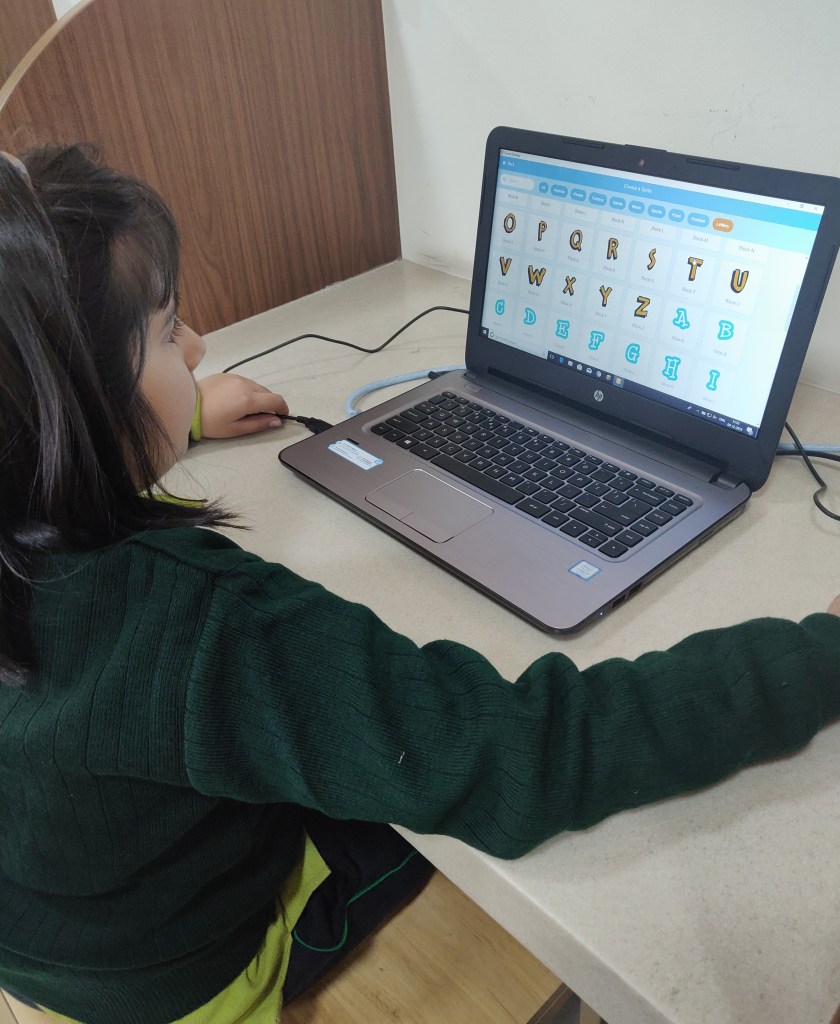
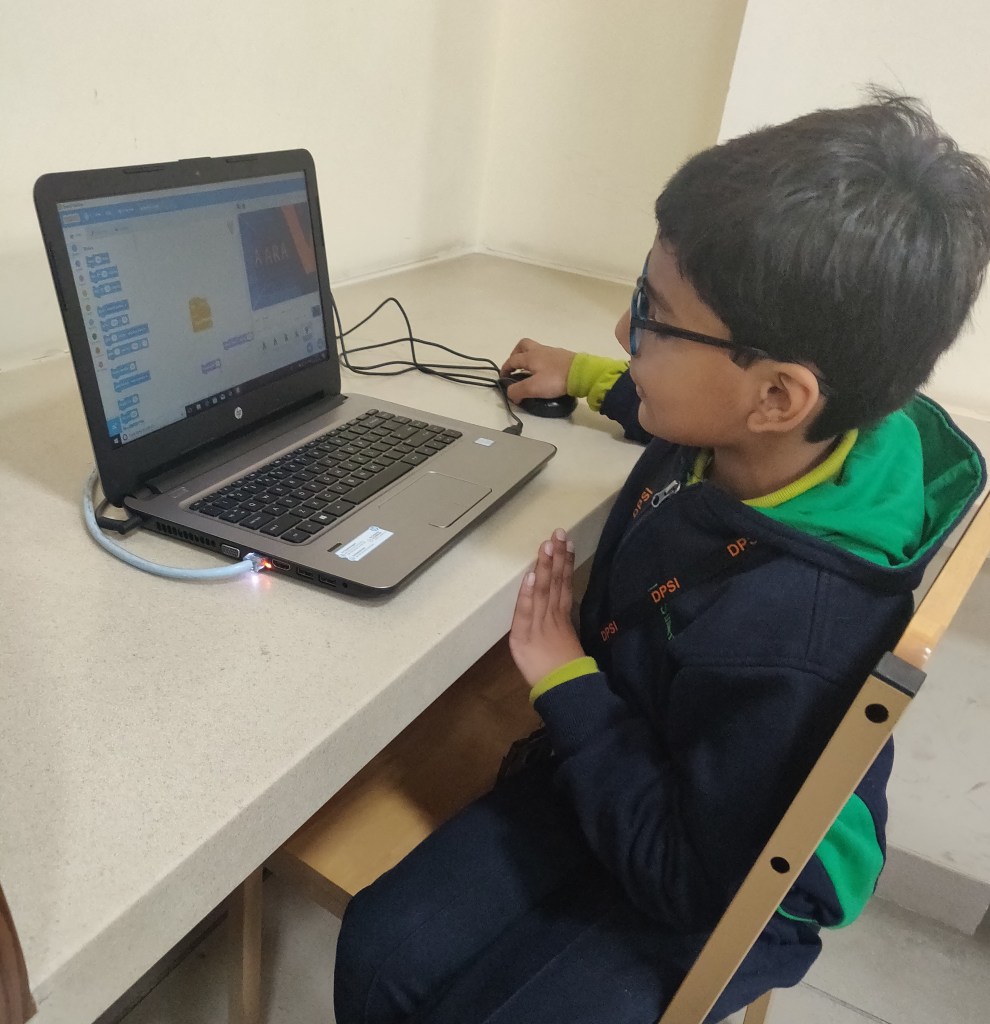
During coding students have learned to using loops and conditional blocks. ‘Scratch’ has been integrated with UOI wherein they programmed conversations between two sprites based on migration.
SEL
Students were involved in a group activity where they were encouraged to share positive attributes of their fellow peers. Each student was given a slip on which they were asked to write a good quality about the person whose name was written on it. This gave them the opportunity to understand and identify the strengths in others and created an atmosphere of unity and togetherness.
 Grade 3c